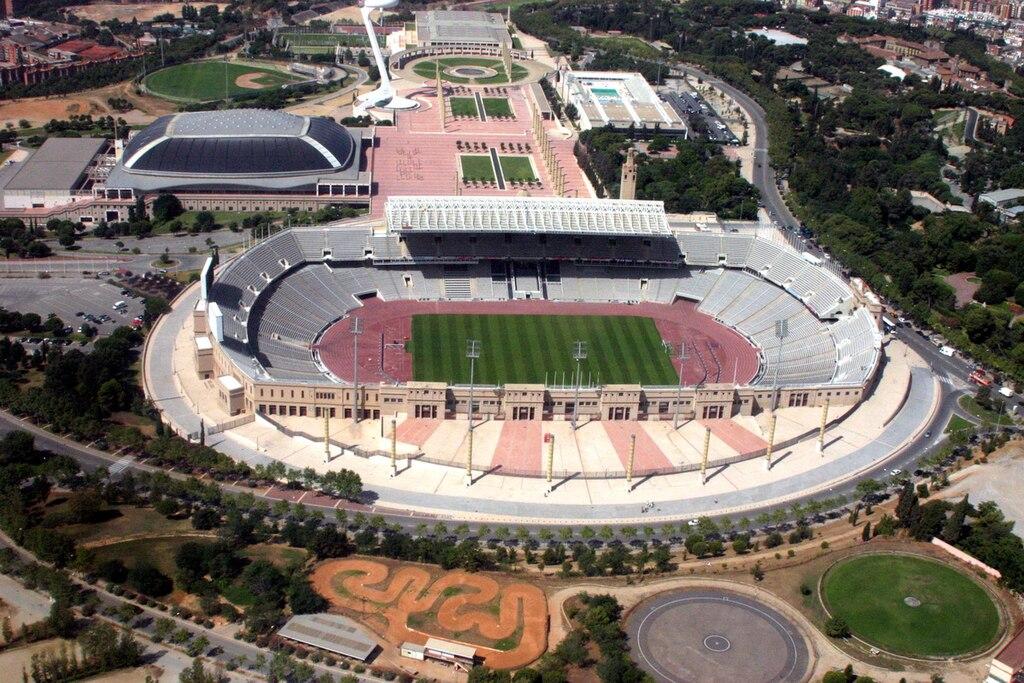
Olympic Stadium
Welcome to a stadium that refused to give up on its Olympic dream, even when war tore that dream apart. Perched on Montjuïc hill, overlooking the harbor, this massive venue has witnessed some of the most dramatic chapters in modern history. The Estadi Olímpic Lluís Companys was built in 1929 for the International Exposition, designed by architect Pere Domènech i Roura as one of Europe's largest stadiums. The city hoped to host the 1936 Olympics, but Berlin won instead.
Spain responded by organizing the People's Olympiad, an anti-fascist alternative to protest Hitler's regime. Just days before it began, the Spanish Civil War erupted. The stadium transformed overnight from a sports venue into a shelter for 2,000 displaced people who lived, ate, and went to school within its walls. After the war, decades of neglect followed under Franco's dictatorship.
Then came a second chance. Between 1985 and 1989, the entire stadium was rebuilt for the 1992 Olympics. Workers lowered the track by 11 meters, and the excavated stone helped build the Sagrada Família. Only the original facade remained as a reminder of the city's unwavering Olympic ambition. In 1992, it finally hosted the opening ceremony, completing a journey that took 63 years.
Any feedback for this story?