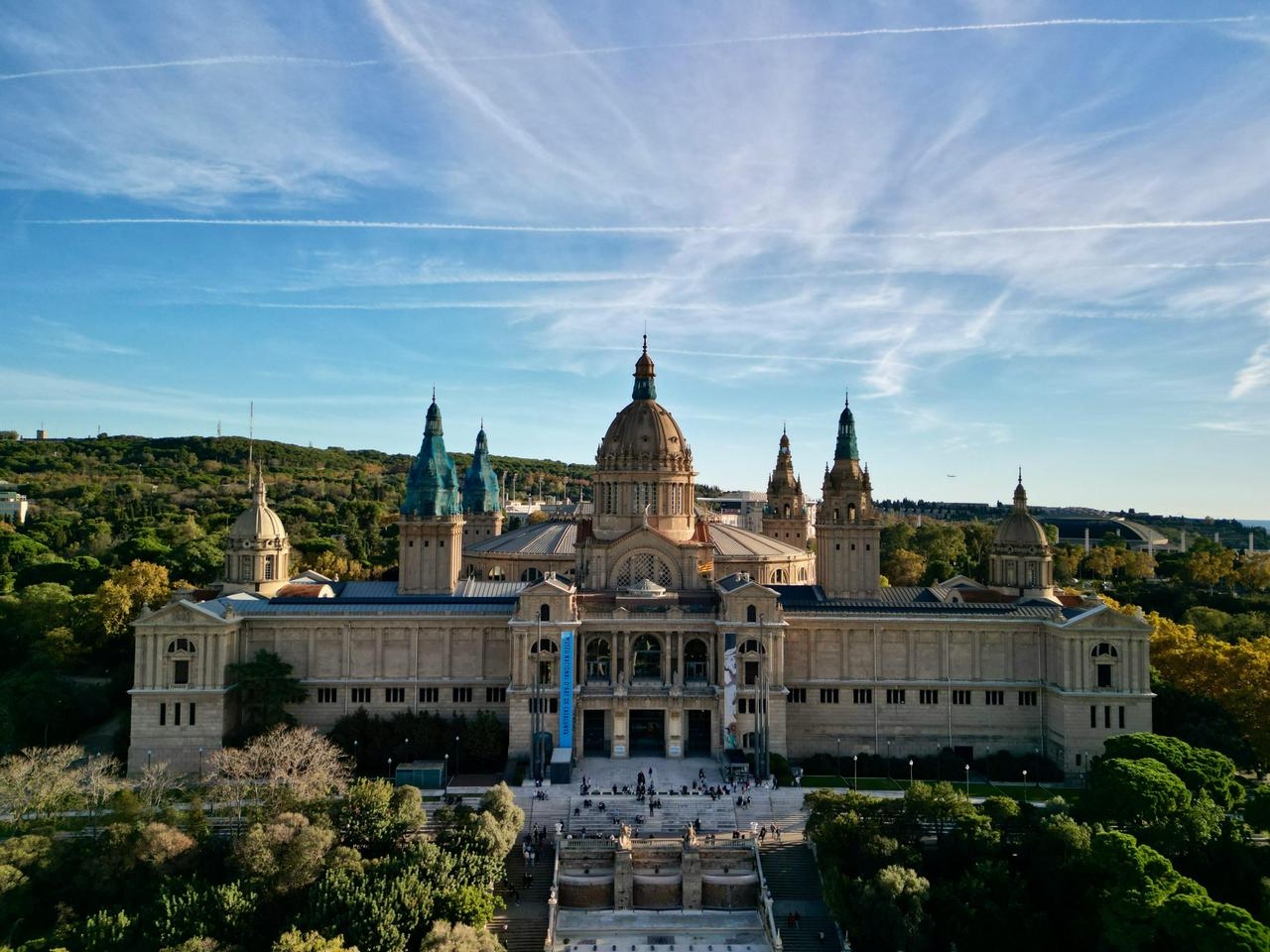
Palau Nacional
Look closely, this is more than a building. This is a palace that was never meant to exist beyond a single summer. On the slopes of Montjuïc hill stands the Palau Nacional, the National Palace, a monumental structure built as the centerpiece for the 1929 International Exhibition. Architects Eugenio Cendoya and Enric Catà designed it as a temporary showcase, using modest materials and rapid construction techniques to complete 32,000 square meters in just three years.
The palace opened with King Alfonso XIII presiding over ceremonies in the magnificent Oval Hall, a space vast enough to hold 1,300 people. Behind the building, nine powerful searchlights pierced the night sky, one beam for each letter in the city's name. Witnesses reported seeing the light from towns over 100 kilometers away. What was built to last six months became too valuable to tear down.
In 1934, the palace transformed into the permanent home of the National Art Museum of Catalonia. The collection grew to over 5,000 artworks, making it the world's most important center for Romanesque art, with precious frescoes rescued from Pyrenean churches. The grand staircase climbing toward the palace passes the iconic Magic Fountain, designed by Carles Buïgas, where water and light still perform nightly shows nearly a century after the exhibition closed.
Any feedback for this story?