Passar Borial avall
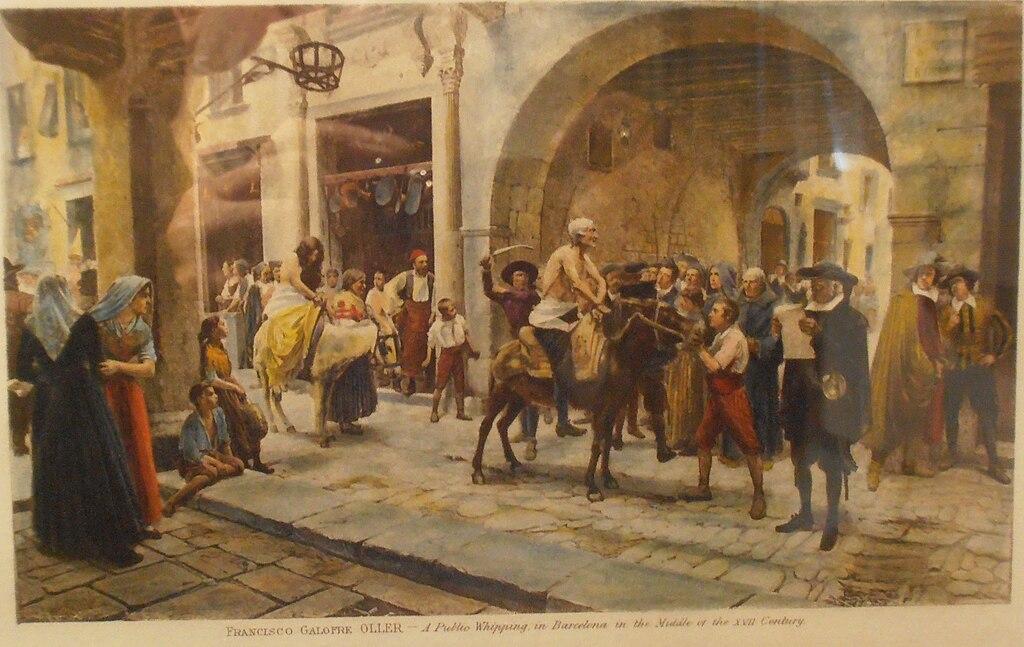
Walking down Carrer de la Bòria means treading the route where criminals once faced public humiliation and brutal punishment. This narrow Gothic Quarter street was the stage for one of medieval justice's harshest rituals: Passar Bòria avall, a procession of shame that lasted from the Middle Ages until 1831. The punishment began at the prison tower near Plaça de l'Àngel. Convicted criminals rode donkeys through crowded streets, wearing placards describing their crimes.
Some carried red ribbon collars displaying stolen goods or murder weapons for all to see. Two friars, an executioner, guards, and jeering crowds followed this grim parade. The condemned endured a calculated torture along the route. At 100 designated stops, the executioner delivered between 1 and 4 lashes at each corner. Victims traveled down Carrer de la Bòria, through Placeta Marcús, along Carrer Montcada to Passeig del Born.
The most serious offenders continued to Pla de Palau, where gallows awaited. The last recorded whipping occurred in 1834, though records mention a woman known as Tia Caterina receiving this punishment in 1816. The street name Bòria derives from boeria, referring to a Roman defensive tower that served as an ox pen for Sant Pere convent.
Any feedback for this story?