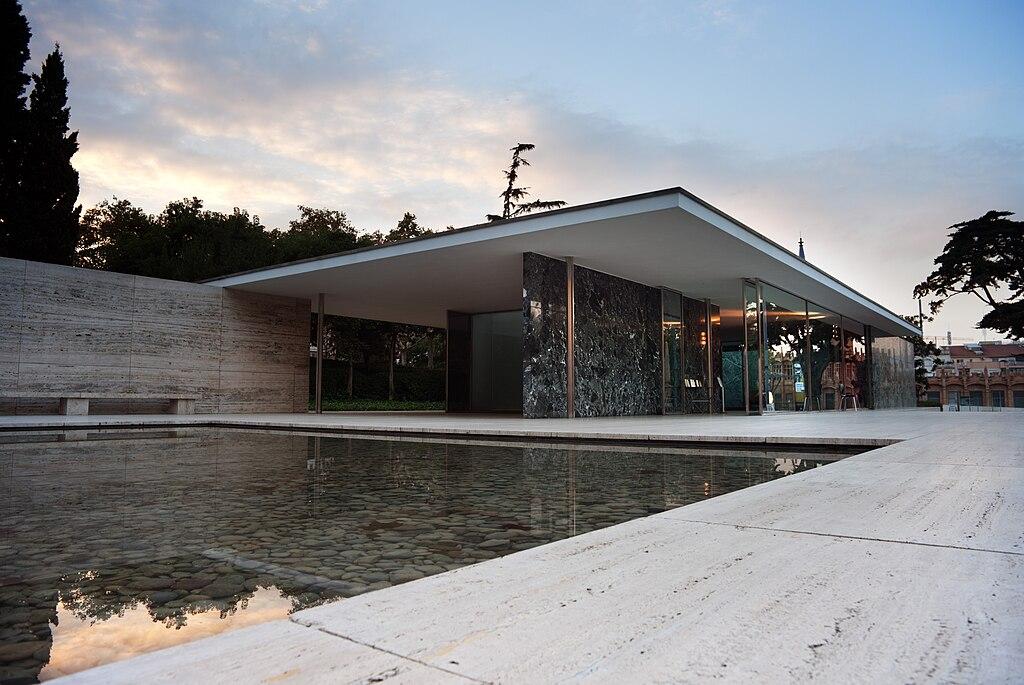
The Barcelona Pavilion by Ludwig Mies van der Rohe
Here is a building that existed for only eight months but rewrote the rules of modern architecture. At the foot of Montjuïc, near the old exhibition grounds, stands the German Pavilion designed by Ludwig Mies van der Rohe and Lilly Reich for the 1929 International Exposition. Germany commissioned this structure not to display products but to show the world something far more powerful: a vision of the new democratic nation rising after World War I.
What made it revolutionary was what it lacked. No exhibits, no rooms, no traditional walls. Just eight slender steel columns holding up what seemed like a floating roof above flowing spaces. Visitors walked through paths that turned and opened unexpectedly, guided by freestanding walls made of Roman travertine, green marble from Greece and the Alps, and golden onyx from Morocco's Atlas Mountains. Glass panels in different colors dissolved the line between inside and outside.
Two reflecting pools mirrored the structure alongside a bronze sculpture by Georg Kolbe. Even the furniture broke new ground. The Barcelona Chair, designed specifically for King Alfonso XIII and Queen Victoria Eugenia's visit, became one of the most famous pieces of furniture ever created. The pavilion was dismantled in 1930, but architects rebuilt it in 1986 on the same spot using materials from the original sources.
Any feedback for this story?