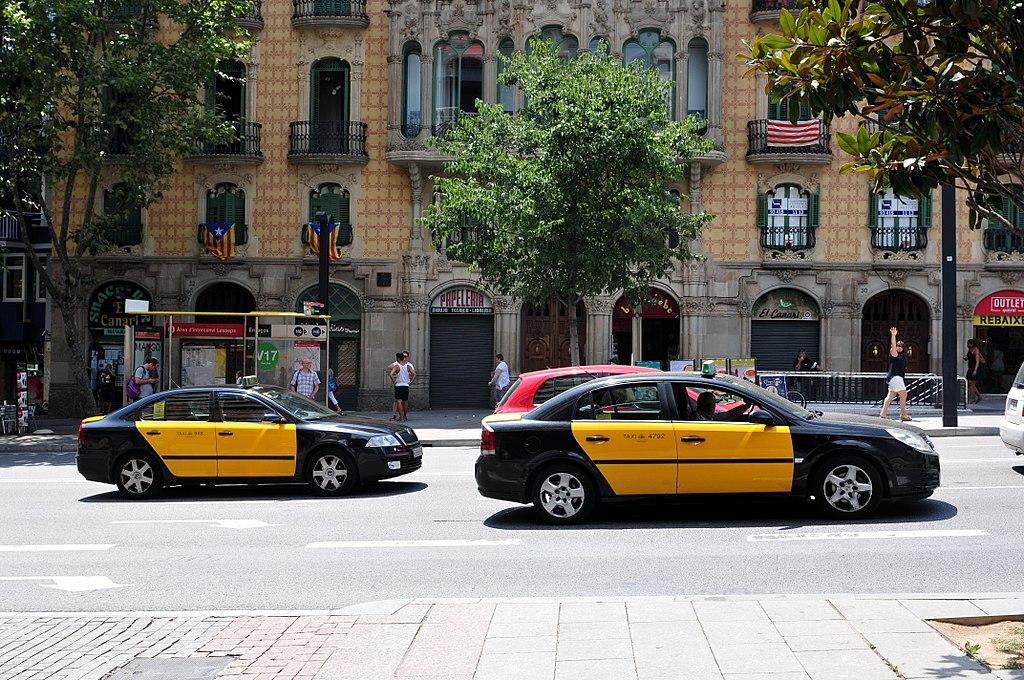
The Black and Yellow Taxis
Right here on these bustling streets, every black and yellow taxi you see carries a piece of history that makes this city unique in all of Spain. Along the corner of Aribau and Diputació, where the first taxi stand opened in 1912, a colorful pricing system once ruled the roads. In 1924, the City Council introduced a regulation requiring taxis to paint colored lines on their vehicles to show their fares. White meant the cheapest ride, followed by red, yellow, and blue for the most expensive.
Passengers knew exactly what they would pay just by looking at the stripe under the window. Everything changed with the 1929 Universal Exhibition. The taxi fleet exploded from 250 vehicles to 4,000 in less than a decade. This rapid growth brought chaos: illegal drivers flooded the streets and unfair pricing became rampant. In 1934, the City Council stepped in and established one unified fare for everyone.
They chose yellow as the official color because research had proven it was the most visible from long distances, making taxis easier to spot in traffic. The black color was added in the 1920s to give the fleet distinction and elegance. Since 1934, this striking combination has remained unchanged, making these taxis instantly recognizable and different from the white taxis found everywhere else in Spain.
Any feedback for this story?