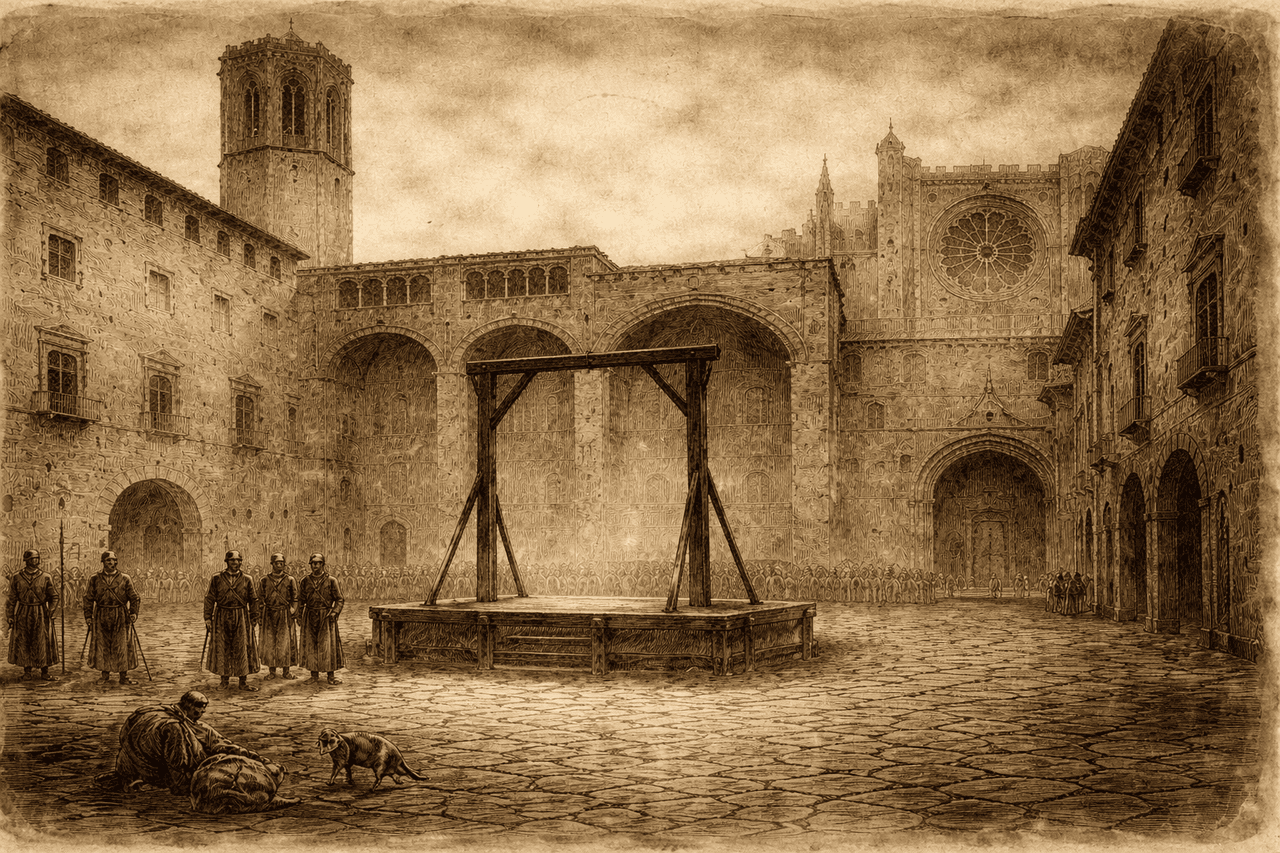
The gallows in Barcelona
For centuries, the stones beneath Plaça del Rei witnessed something most visitors never imagine: this elegant medieval square, enclosed by the Royal Palace, served as one of the city's primary execution grounds. The gallows stood here from the Middle Ages through the 19th century, where public hangings and the Inquisition's brutal auto de fe ceremonies unfolded before crowds.
A gallows is a wooden structure used for executing people by hanging, and this square saw countless lives end in this manner. The executioner himself lived in a tiny house on this very square, receiving a royal stipend for his grim work. He ran a peculiar side business selling body parts of the executed as good luck charms and medicines. The shoes of the deceased were especially prized, believed to protect homes from evil spirits.
By the 1800s, executions moved to the Patio de Cordeleros, named after the rope makers who crafted the hangman's nooses. Public hangings ended in 1897, replaced by the garrote, a brutal strangulation device introduced in 1812. This iron collar tightened around the neck became the standard method until 1974. Under Franco's dictatorship, at least 1,706 people were executed between 1940 and 1952, mostly by firing squad at Camp de la Bota near the beach.
Any feedback for this story?