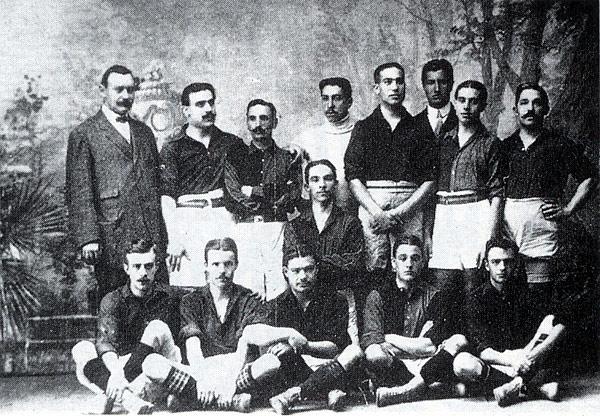
The history of FC Barcelona
We touched briefly on Barcelona's founding in the last story, so let's move straight to what made this club something far greater than a sports team.
In 1908, with the club drowning in debt and on the verge of collapse, Joan Gamper made a decision that would define everything that followed. As president, he deliberately tied the club to Catalan identity, to its language, its democratic values, and its cultural pride. It was a calculated move to save a struggling organisation, but it transformed FC Barcelona into a political institution. By 1918, journalists were already calling it "the club of Catalonia."
That identity came at a cost. In 1936, club president Josep Sunyol accidentally crossed the front line outside Madrid. Francoist troops stopped him and executed him on the spot, without trial. For decades, the club said nothing.
Under Franco's dictatorship, speaking Catalan in schools or public spaces was forbidden. But inside Camp Nou, fans waved Catalan flags and sang in their own language, and the regime largely looked away. Historians have described it as resistance that carried less risk than fighting underground. In 1943, Barcelona lost a cup semi-final 11-1 in Madrid, after the secret police had visited their changing room to remind the players how much gratitude they owed the Spanish state.
The motto Más que un club, "More than a club," was never just marketing.
Any feedback for this story?