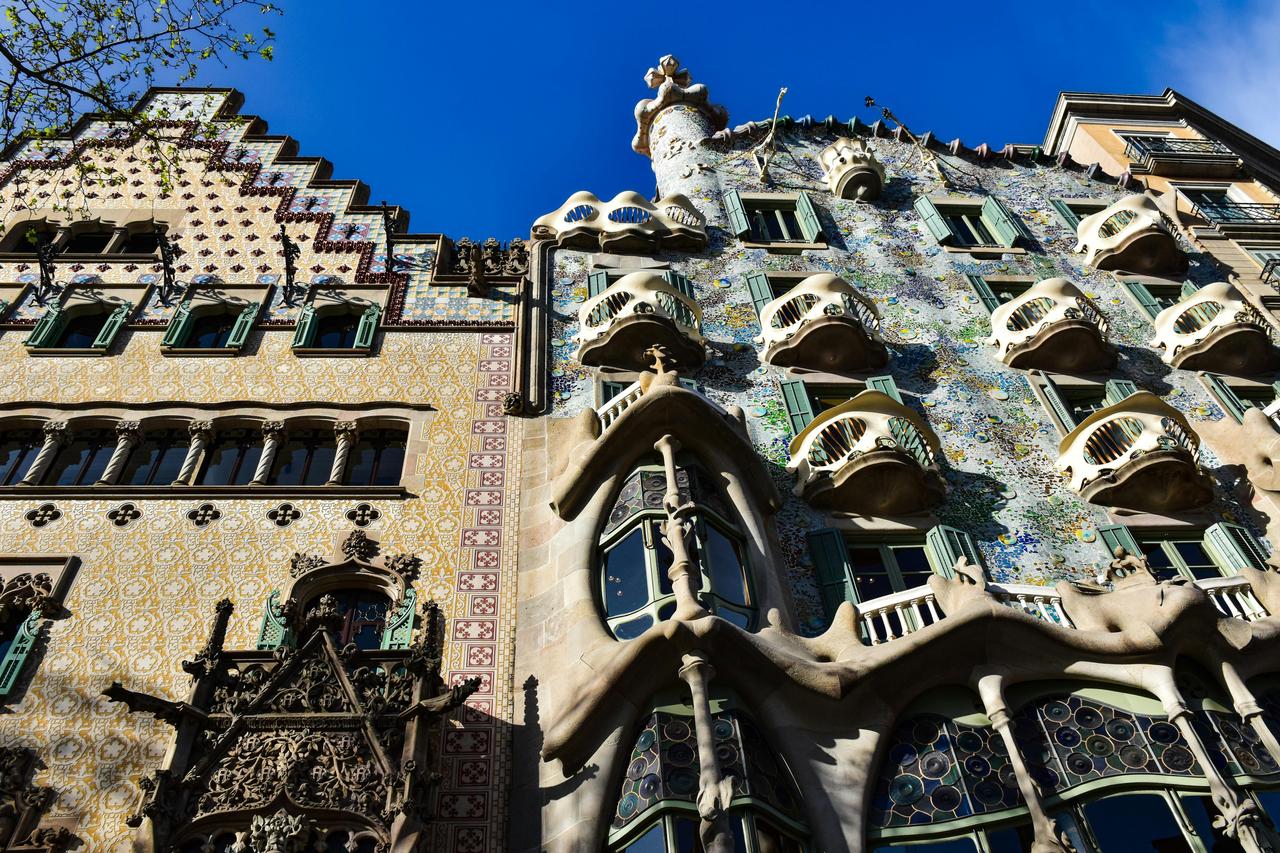
The Modernism
Between 1888 and 1911, a cultural revolution transformed one European city into an open air museum of curved balconies, colorful ceramic facades, and buildings that seemed to grow like living organisms. This was Modernisme, the Catalan answer to Art Nouveau, and it was far more than decoration. It was a region declaring its identity after 150 years of suppressed culture and language. Along the elegant streets of the Eixample district, where wealthy industrialists built their dream residences, the movement found its stage.
Modernisme began with architect Lluís Domènech i Montaner, whose 1878 essay called for a uniquely Catalan architecture. His vision materialized at the 1888 Universal Exposition with a castle like café that introduced this new style to the world. The movement drew from nature's organic forms, medieval Gothic elements, and Moorish design.
Architects like Antoni Gaudí, Josep Puig i Cadafalch, and Domènech i Montaner created buildings with wrought iron balconies, stained glass, and ceramic tiles that told stories of Catalan legends and history. The rising industrial bourgeoisie funded this artistic explosion, competing to build the most spectacular homes along Passeig de Gràcia.
Their investment created what would become nine UNESCO World Heritage sites, more than any other city, making this district an architectural treasure without equal in Europe.
Any feedback for this story?