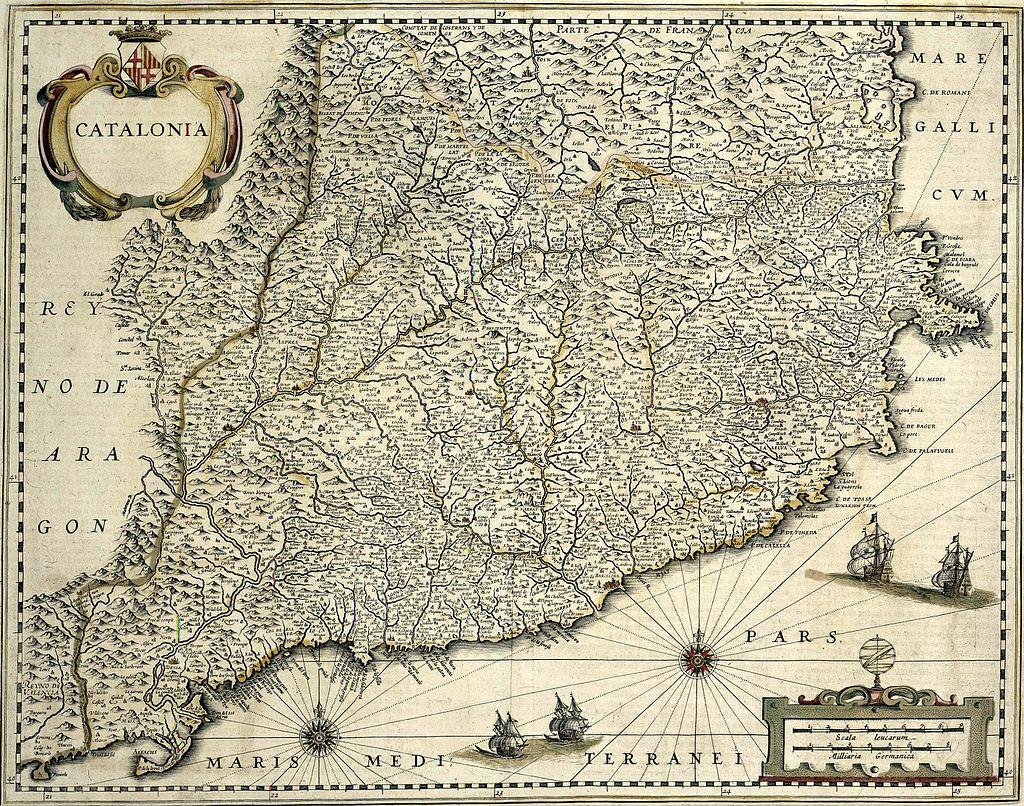
The origins of Catalonia
Long before this Mediterranean city rose to prominence, the ground beneath your feet witnessed empires clash and a new nation emerge from their ruins. Walk through the narrow stone passages of the Gothic Quarter, where Roman walls still stand, and you are tracing the very birthplace of Catalonia. The story begins with Greek traders in the 6th century BC, followed by Roman legions who made this their first conquest in Hispania in 218 BC.
After Rome collapsed, Visigoths ruled until 712, when Moorish armies swept north from Africa. Everything shifted in 801 when Charlemagne's Frankish forces reclaimed the territory, establishing a military buffer zone called the Spanish March. But Catalonia's true founding came later. In 878, a nobleman named Wilfred the Hairy became Count of Barcelona and united several counties stretching from the Pyrenees to the Mediterranean coast.
When he died in 897, he did something revolutionary: he passed his lands directly to his sons without seeking approval from the Frankish king. This bold act of independence planted the seeds of Catalan sovereignty. The name Catalonia first appeared in written records around 1114, likely derived from Gothia, meaning Land of the Goths. What started as a frontier between Christian and Muslim worlds grew into a distinct nation with its own language, legal system, and fierce sense of identity.
Any feedback for this story?