The Roman Wall
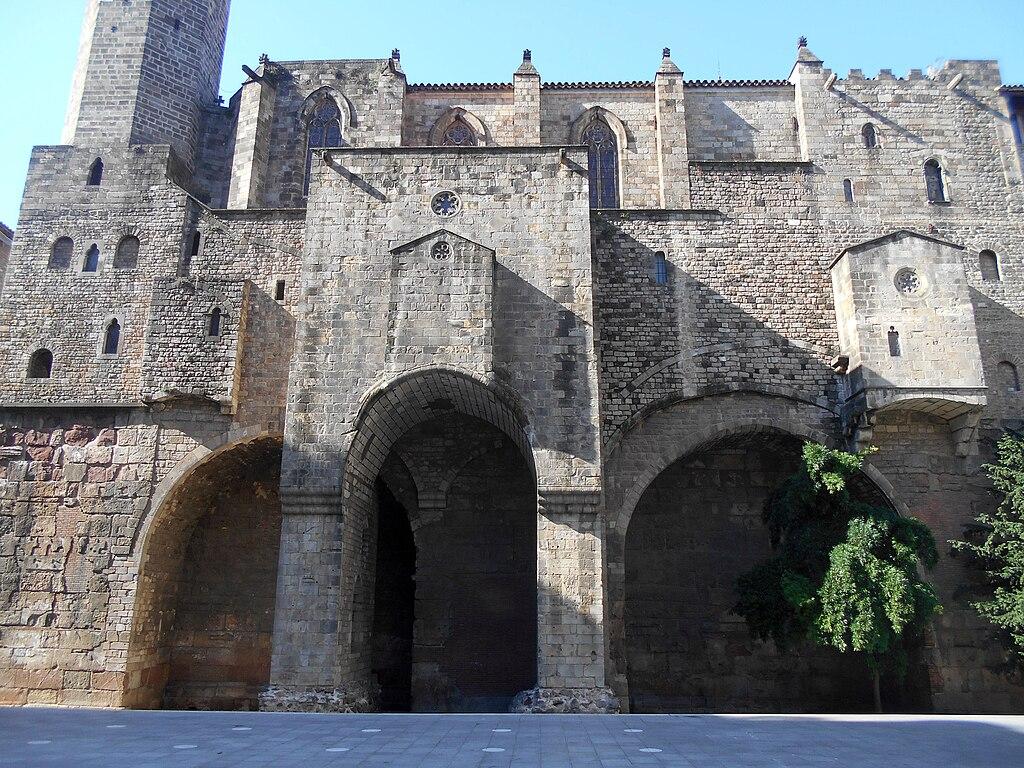
Right here, history unfolds in layers where Roman defense meets medieval devotion. Where Via Laietana meets the old quarter, a massive section of the Roman wall rises 16 meters high from the early 4th century AD. This fortification once protected Barcino, the ancient Roman colony that stood here, stretching 1.3 kilometers around the settlement with walls up to 8 meters thick. The Romans first built these defenses in the 1st century BC, then heavily reinforced them between the 3rd and 4th centuries when Germanic tribes threatened from the north.
What makes this spot remarkable is how civilizations built upon each other. The 14th century Royal Chapel of Santa Àgata sits directly on top of the Roman wall, using the ancient stones as its foundation. Roman defense towers support Gothic vaults, creating a striking blend of two eras separated by a thousand years. The square honors Ramon Berenguer III, who ruled as Count of Barcelona from 1097 to 1131. Known as "the Great," he transformed the region into a Mediterranean power, expanding territories from the Pyrenees to Provence.
In 1114 and 1115, he led naval expeditions against Muslim strongholds in Majorca and Ibiza, freeing thousands of Christian slaves and establishing trade dominance. His son later married the heir to Aragon, creating the Crown of Aragon. The bronze equestrian statue by Josep Llimona shows him overlooking the ancient walls that protected his city.
Any feedback for this story?