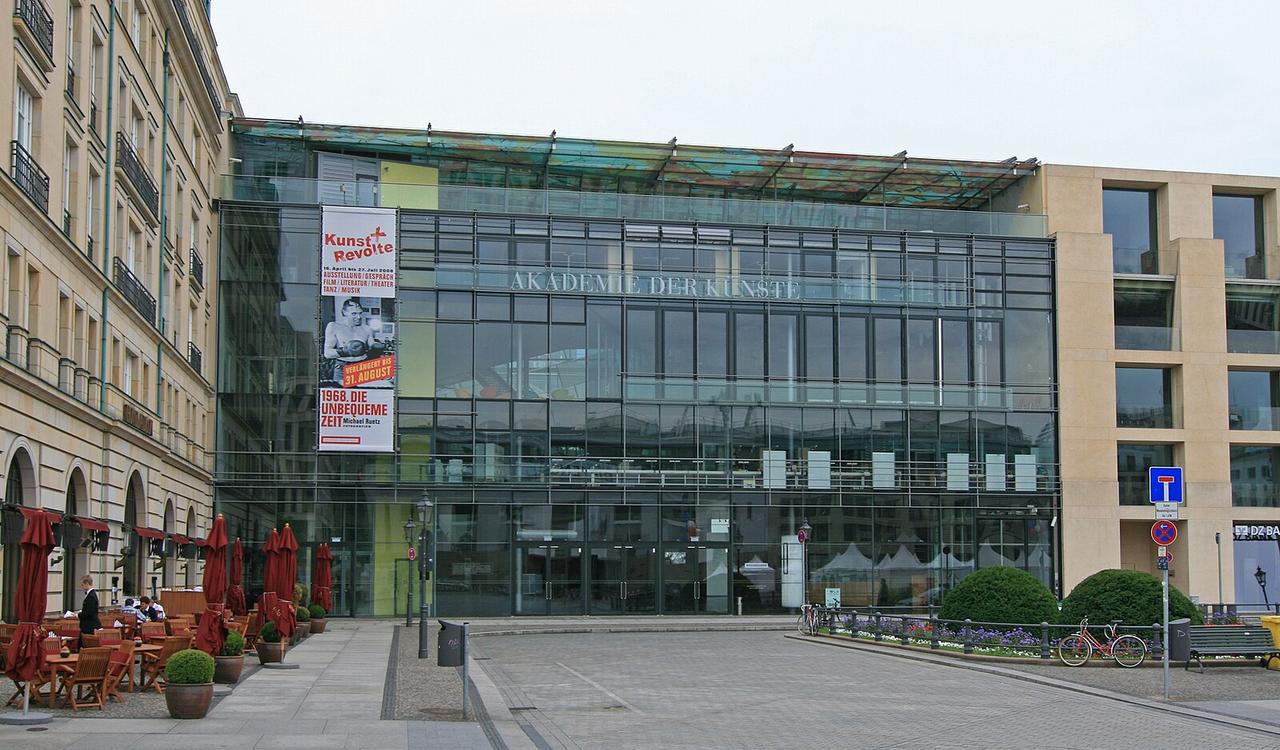
Academy of Arts
Berlin, a city steeped in history and culture, has in recent years experienced remarkable economic growth, mainly driven by the creative sector. This boom has made Berlin a major hub of economic activity in Germany. The city is famous for its wealth of art and culture, boasting more than 170 museums. One of the most prominent sites is Museum Island, located at the northern tip of an island in the River Spree. Here you can find five of Berlin’s most important museums: the Alte Nationalgalerie, the Altes Museum, the Bode Museum, the Neues Museum, and the Pergamon Museum.
These institutions contain impressive collections ranging from ancient art to modern masterpieces, making the island a true mecca for art lovers. Another significant cultural institution is the Akademie der Künste on Pariser Platz. Founded in 1696 by Elector Frederick I of Prussia, it has since played a crucial role in Berlin’s cultural life. Initially, it was a meeting place for artists to exchange ideas, but over time it also became an advisory body to the government, a function it still serves today.
The Akademie der Künste has a selective membership policy. New members are nominated in a secret process and appointed by the president. The total number of members is limited, underlining the institution’s exclusivity and prestige. The academy is not only a center of artistic excellence but also fosters cultural debate and innovation in Berlin.
Any feedback for this story?