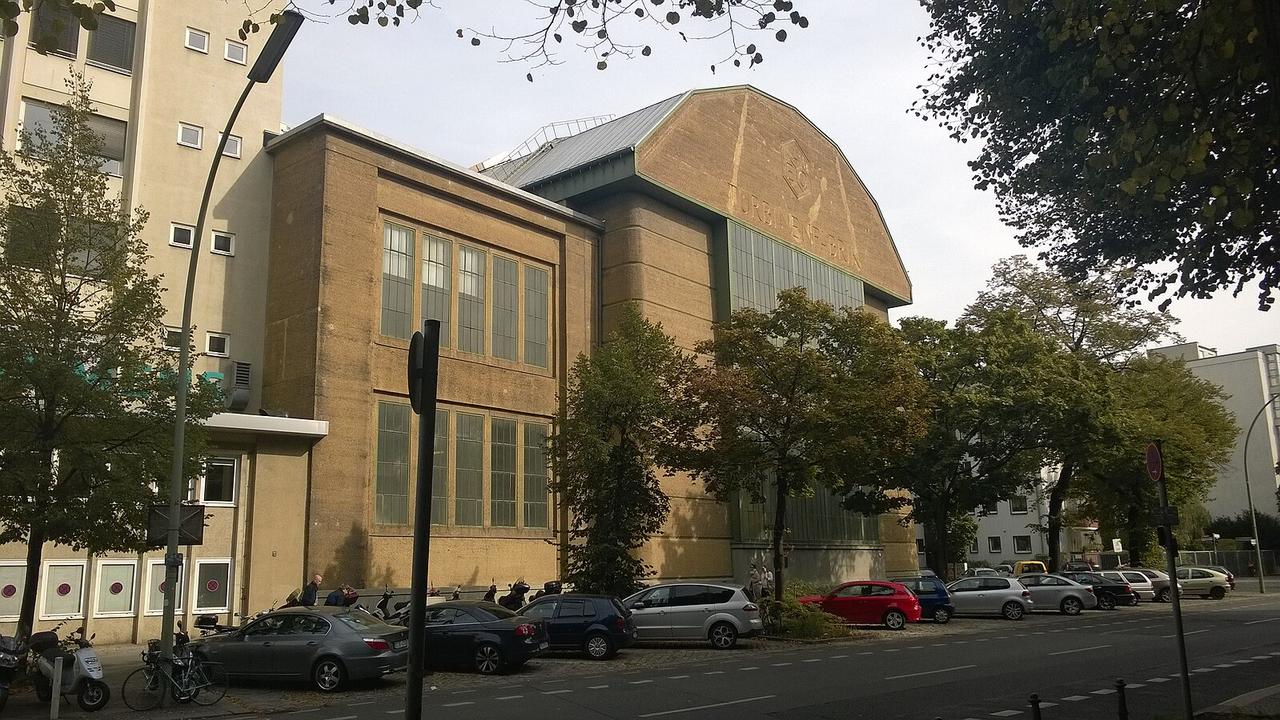
AEG turbine factory
The building on Huttenstraße in Berlin's Moabit district, originally commissioned in 1892 by the Allgemeine Elektricitäts-Gesellschaft (AEG), is regarded as one of the most pioneering architectural works of the early 20th century. Designed by renowned architect Peter Behrens, the factory was completed in 1909 and initially served to produce turbines for power plants. Behrens, often considered a pioneer of modernism, designed a building that was not only functional but also aesthetically progressive.
The hundred-metre-long structure with its impressive fifteen-metre-high glass windows on both sides is seen as one of the first successful designs of a modern industrial hall. Emil Rathenau, the founder of AEG, acquired the rights in 1883 to produce Thomas Alva Edison’s light bulb in Germany, which led to the creation of AEG.
The company later expanded into other electrical products and became known in the Netherlands for household appliances such as vacuum cleaners and washing machines. Remarkably, the building, although now owned by Siemens, is still used for its original purpose: the production of turbines.
Any feedback for this story?