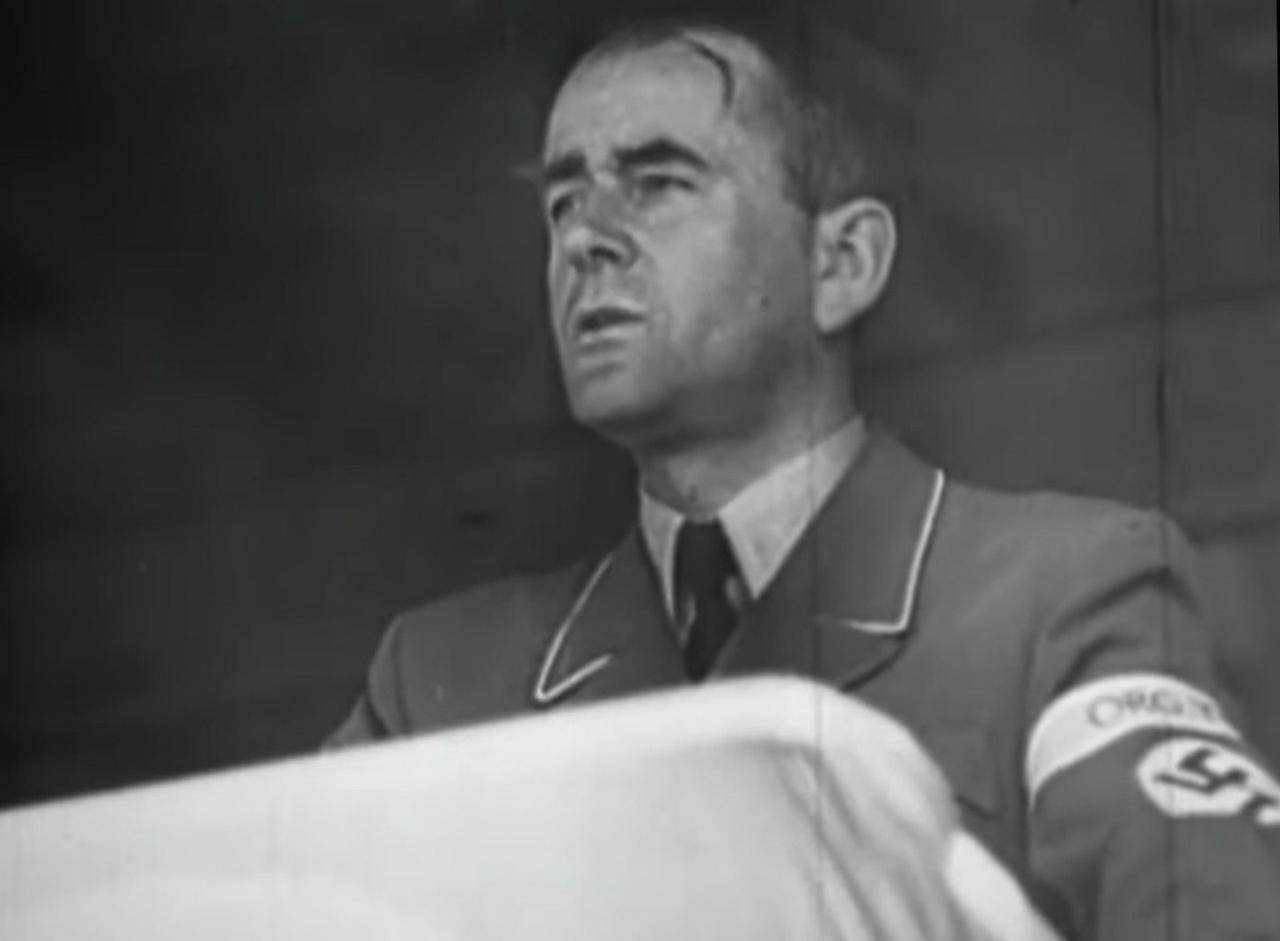
Albert Speer
Albert Speer, the architect behind some of Nazi Germany’s most iconic and ominous structures, remains a controversial figure in history. Born on March 19, 1905, in Mannheim, he initially pursued an unremarkable career in architecture until a chance encounter with Adolf Hitler in 1933 changed his trajectory. Speer soon became Hitler’s favorite architect, earning the title “First Architect of the Third Reich.” His designs sought to reflect the grandeur and permanence of the regime. One of his most famous projects was the Zeppelinfeld in Nuremberg, inspired by classical Roman architecture and used for mass Nazi rallies.
His grandest vision was the redesign of Berlin, known as “Germania,” featuring massive boulevards, monumental buildings, and the enormous Volkshalle. Though never realized, it revealed his ambition to create a capital surpassing all others. In 1942, Speer was appointed Minister of Armaments and War Production. Under his management, German war output increased dramatically despite heavy Allied bombing. He relied heavily on forced labor, including concentration camp prisoners. After the war, Speer portrayed himself as an apolitical technocrat who claimed ignorance of the Holocaust.
At the Nuremberg Trials, he was one of the few to admit some responsibility, avoiding execution but sentenced to 20 years in prison. While incarcerated, he wrote memoirs such as “Inside the Third Reich,” viewed by some as self-serving but also valuable historical testimony. Released in 1966, he lived quietly until his death in 1981. His legacy remains deeply contested, reflecting both his architectural genius and his complicity in Nazi crimes.
Any feedback for this story?