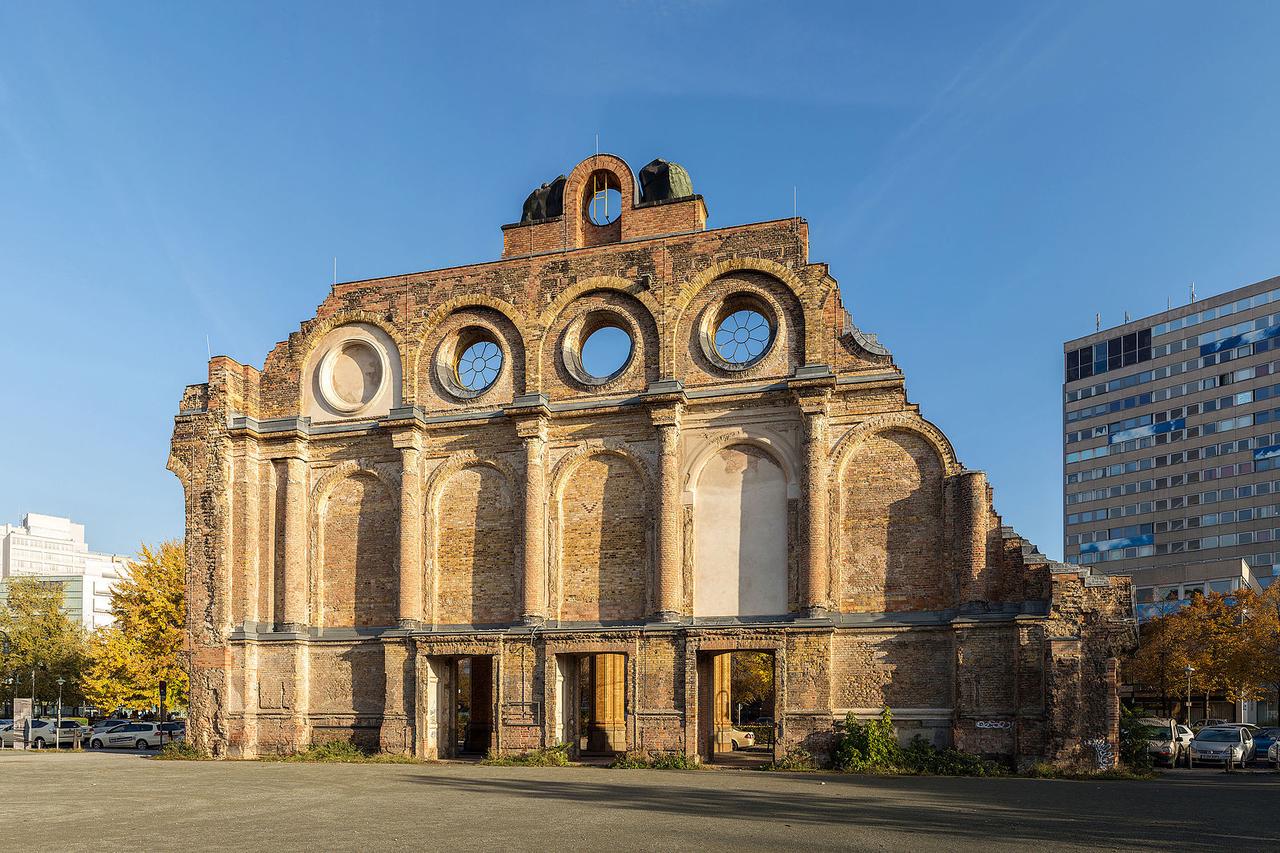
Anhalter Station
In the heart of Berlin stand the evocative ruins of Anhalter Bahnhof, an icon that speaks volumes about the city’s turbulent past. Once a grand railway terminus, it served as a gateway to Berlin, welcoming travelers from across Europe. Today, its remains act as both a somber memorial and a symbol of resilience. Constructed in 1839, it quickly became one of Berlin’s most important railway stations, linking the Prussian capital to Leipzig, Frankfurt, and Munich.
With its majestic façade and grand interiors, the station was an architectural marvel of its time. Two years after opening, the line was nationalized, bringing Anhalter Bahnhof under the Prussian State Railways. It soon earned the nickname “Tor in die blaue Ferne,” the gateway to the far unknown. Before World War II, it was Berlin’s main station for routes to southern Germany, Austria, and Italy. In World War I, soldiers departed from here for the front in France. In the 1920s and 30s, luxury sleeper trains departed for Europe’s great capitals.
In February 1945, Allied bombing devastated the station, leaving it in ruins. By 1959, most of the structure was demolished, but protests saved the central portico with the station clock and statues of Night and Day. During the Cold War, it stood in West Berlin, symbolizing the city’s division. Today, the remaining arches and weathered brickwork endure as a monument to Berlin’s resilience and remembrance.
Any feedback for this story?