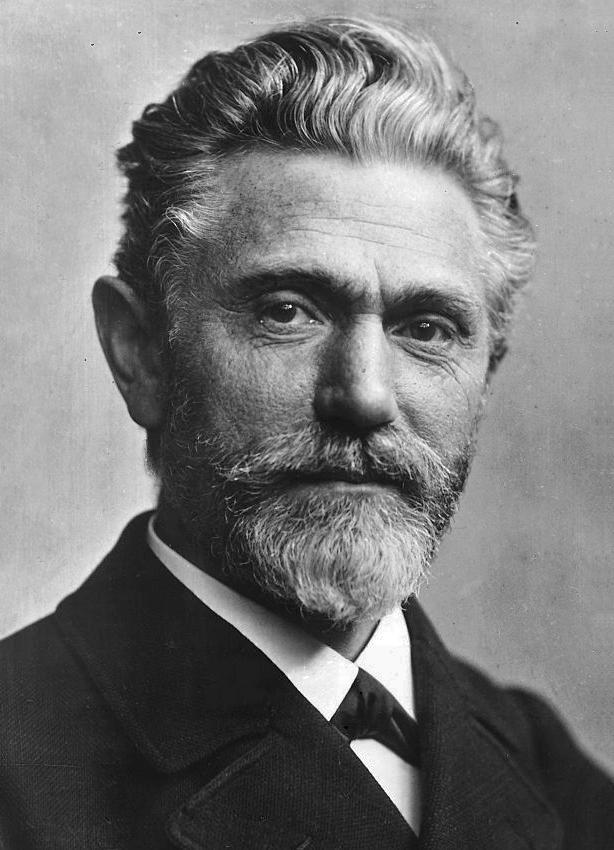
August Bebel
In mid-19th century Cologne, August Bebel grew up amidst the noise of industrialization. Born on February 22, 1840, into a working-class family, he experienced hardship early on after the death of his father. His mother worked tirelessly, often moving in search of employment, and young Bebel became familiar with life in different German towns. As a teenager, he trained as a wood turner, a craft requiring great precision.
This trade became his gateway into labor politics. By the 1860s, Bebel was drawn to the growing labor movement. Through the Leipzig Workers’ Educational Association, he met Wilhelm Liebknecht, with whom he co-founded the Social Democratic Workers’ Party in 1869. This party merged in 1875 with the General German Workers’ Association to form the SPD, which became a powerful force for workers’ rights. Bebel soon emerged as a strong voice in the Reichstag, opposing Bismarck’s Anti-Socialist Laws of the 1870s. Despite repression, the socialist movement grew stronger.
In 1879, Bebel published “Woman and Socialism,” a groundbreaking book calling for women’s emancipation and gender equality as essential to socialism. Its influence spread worldwide. Though imprisoned several times, Bebel’s resolve never faltered. Under his leadership, the SPD became Europe’s largest socialist party by the early 20th century. August Bebel died on August 13, 1913, but his legacy endures. Bebelplatz in Berlin bears his name as a reminder of his fight for equality.
Any feedback for this story?