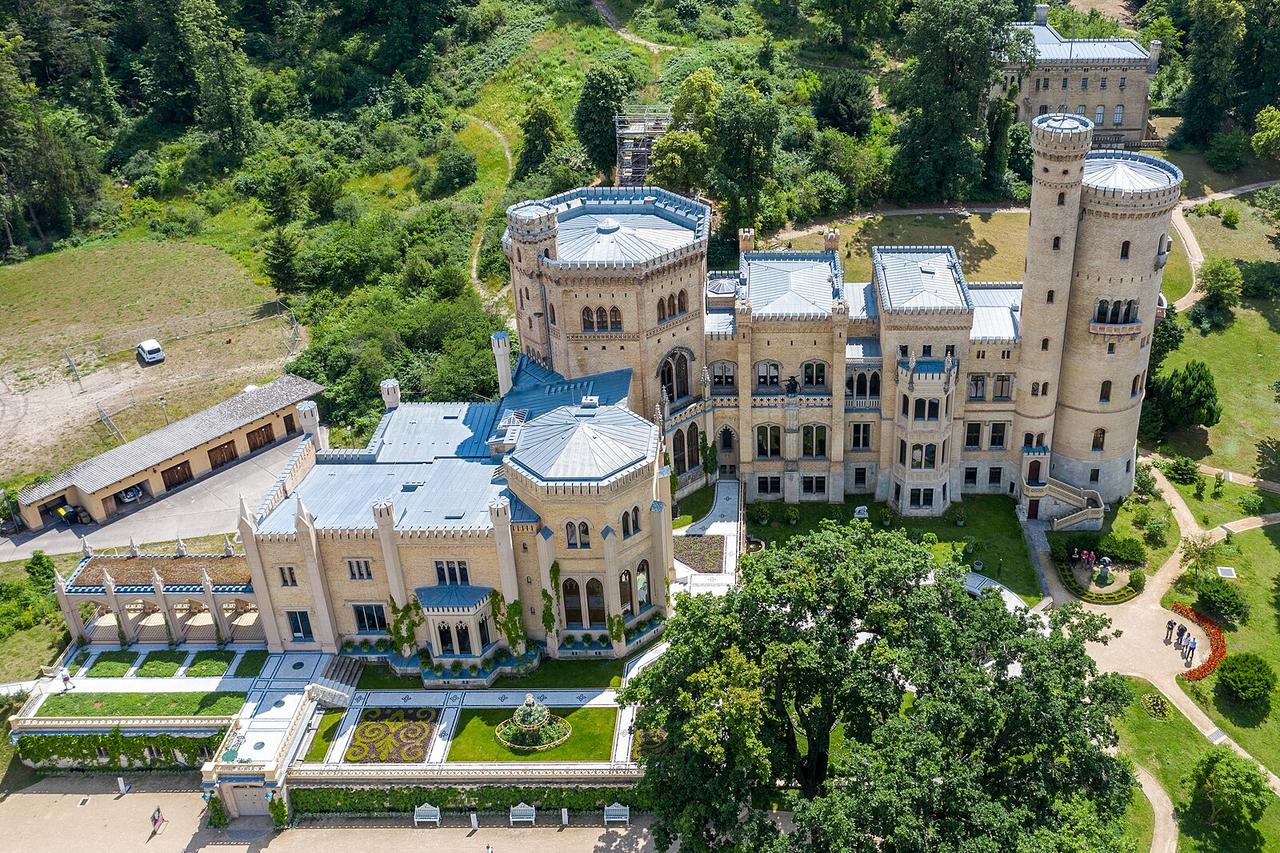
Babelsberg Palace
Nestled along the banks of the Havel, between Berlin and Potsdam, lies the enchanting Schloss Babelsberg. Surrounded by the picturesque park, this palace served as the summer residence of Prince Wilhelm I, later Emperor, and his wife Augusta of Saxe-Weimar-Eisenach. Construction began in 1835 and was completed in 1849, designed by Karl Friedrich Schinkel, Friedrich Ludwig Persius, and Johann Heinrich Strack in the English Gothic style. Princess Augusta played a key role, keeping up with the latest architectural trends.
Yet the process was far from smooth. Augusta’s lavish visions often clashed with Wilhelm’s limited funds—his allowance from his father forced repeated compromises and caused delays. Despite these challenges, the palace emerged as a splendid retreat where Wilhelm I spent summers until his death in 1888. His successor chose another residence, though Wilhelm II considered refurbishing it in 1907, plans that were never realized.
Since 1990, Schloss Babelsberg has been part of the UNESCO World Heritage list, recognized for its cultural and historical value. The palace reflects the interplay of vision, ambition, and constraint that shaped its creation. Today it stands as a captivating site where visitors can explore both history and timeless beauty.
Any feedback for this story?