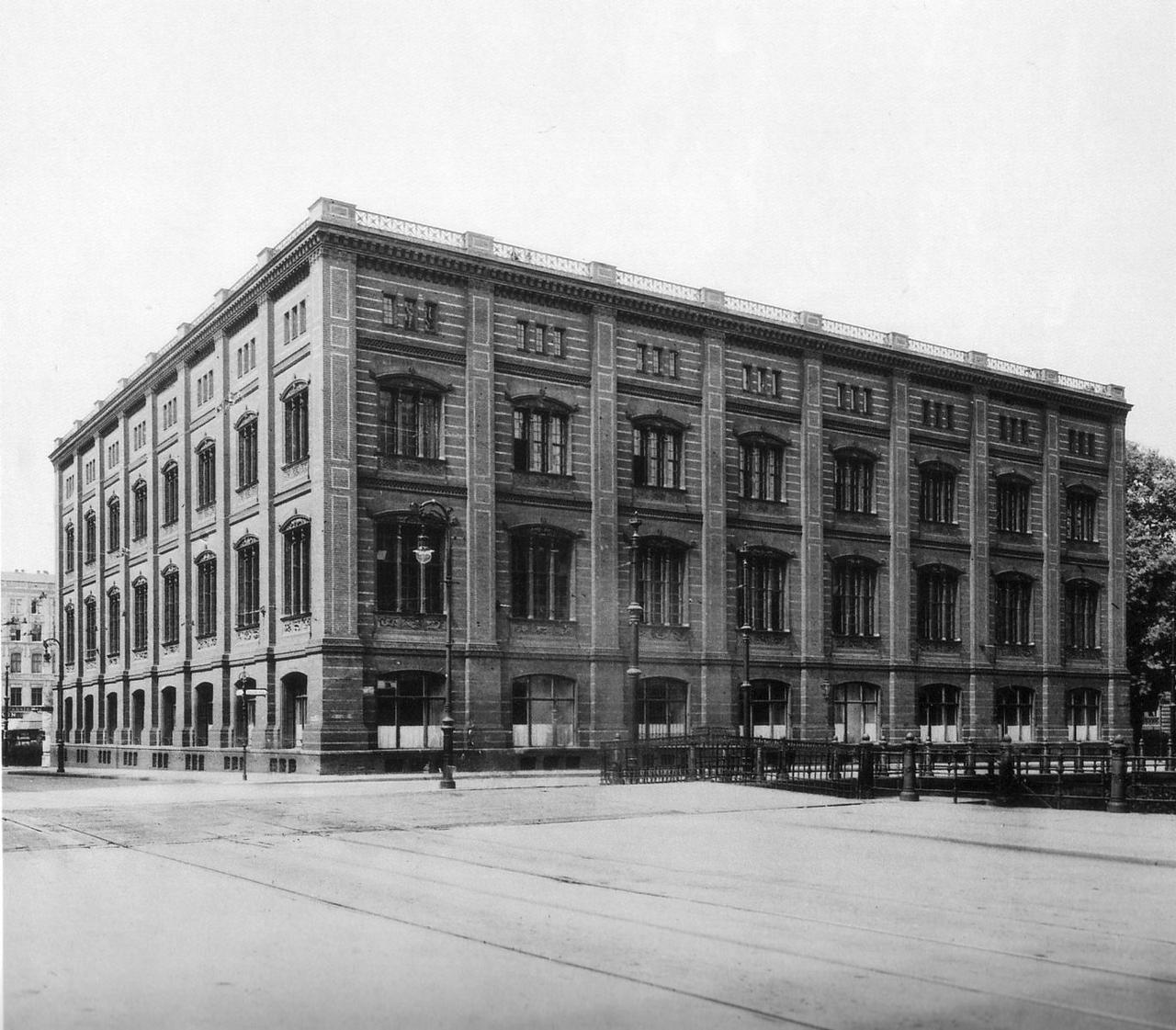
Bauakademie built – 1832
The Bauakademie, completed in 1836, once dominated a prominent spot near Berlin’s City Palace, representing a major step in architectural innovation. Designed by Karl Friedrich Schinkel, it introduced a modern style using exposed red brick and terracotta, drawing inspiration from English industrial architecture, which was unusual for public buildings at the time. Originally, the Bauakademie hosted the Prussian Building Academy and the State Construction Commission.
It became a center for architectural education, research, and practical training. Students studied design, construction techniques, and engineering, while Schinkel’s own office within the building influenced generations of architects. The building also served public functions. The ground floor contained shops that helped fund the academy, while the upper floors included lecture halls, a library, and even Schinkel’s residence. After Schinkel died in 1841, his apartment was turned into a museum showcasing his work, making the Bauakademie an early example of a building serving both educational and cultural roles.
During the late 19th and early 20th centuries, the Bauakademie housed the Prussian State Institute for Photogrammetry. The institute developed advanced techniques for documenting buildings, collecting around 20,000 glass negatives of architecture from Germany and abroad. World War II left the Bauakademie heavily damaged. Although restoration was considered, it was ultimately demolished in 1962 to make way for the East German Ministry of Foreign Affairs.
After that building’s demolition in 1995, the site remained empty until the German Bundestag approved reconstruction plans in 2016, aiming to establish a center for architecture and urban development. The Bauakademie remains a symbol of Berlin’s architectural heritage. Its influence on design, education, and urban planning continues to shape the city, bridging history and modern development.
Any feedback for this story?