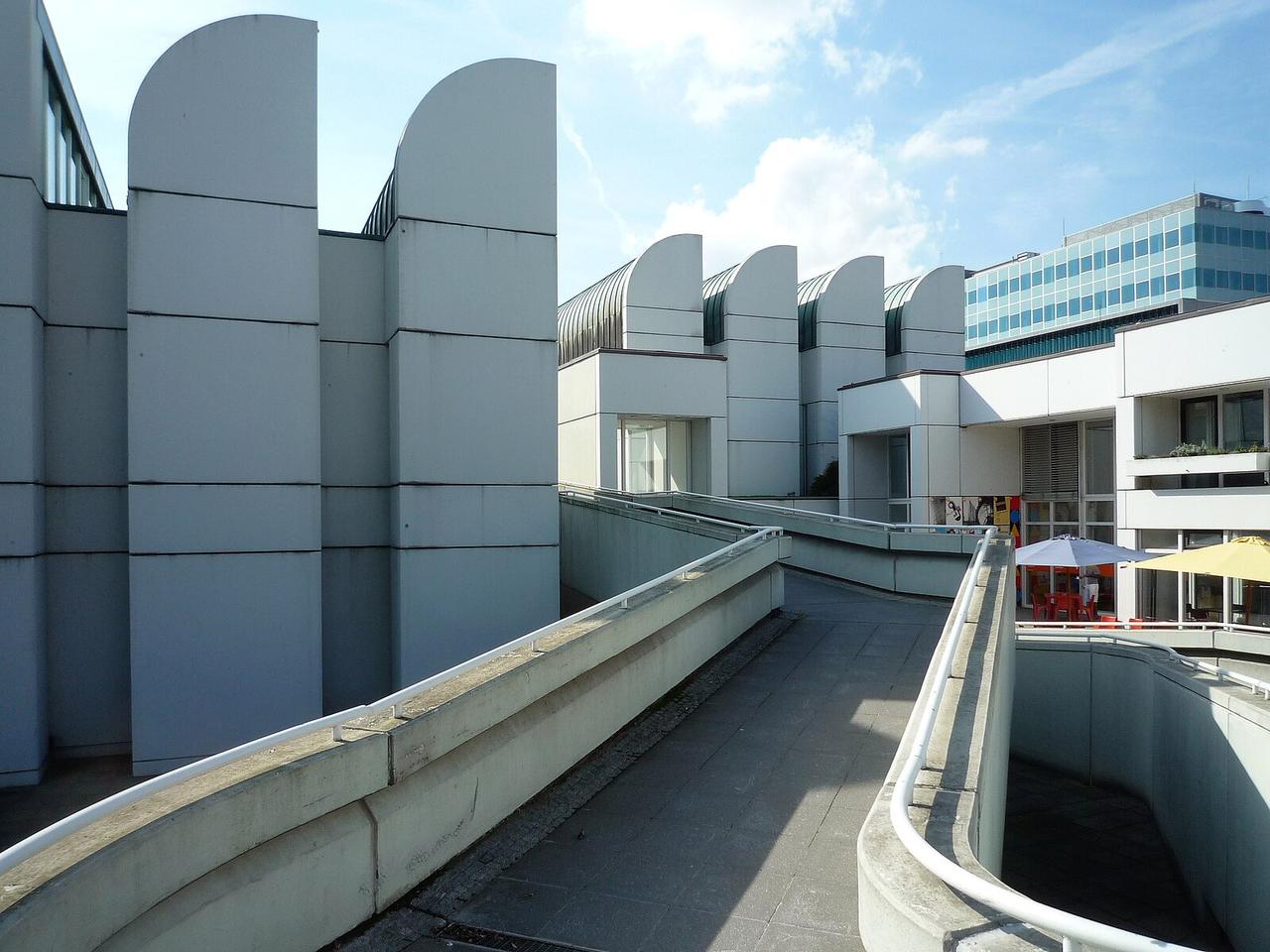
Bauhaus Archive
The Bauhaus-Archiv in Berlin, with its striking white façade and wave-like roofline, is more than a museum—it is a monument to the revolutionary ideas of the Bauhaus School. Founded in 1919 by Walter Gropius, the Bauhaus was a radical experiment in art education that aimed to unite art, craft, and technology, erasing the divide between fine and applied arts. Operating in Weimar, Dessau, and Berlin until its closure in 1933 under Nazi pressure, the school’s brief existence left a profound global legacy in modern design and architecture.
The Bauhaus-Archiv was established in 1960 by Hans Maria Wingler to safeguard this heritage. The building, designed by Gropius but only completed after his death in 1979 by his firm, embodies the functionalist aesthetic of the Bauhaus, emphasizing simplicity, functionality, and harmony with its setting. Inside, the museum holds a vast collection of works by Bauhaus masters, including Gropius, Ludwig Mies van der Rohe, Paul Klee, and Wassily Kandinsky.
Visitors can explore original artworks, furniture, photographs, and documents that trace the school’s groundbreaking approach to design. The institution also embraces an educational mission: temporary exhibitions, workshops, and lectures keep Bauhaus principles alive today. Its library is a rich resource for scholars, with extensive archives, publications, and rare books.
Any feedback for this story?