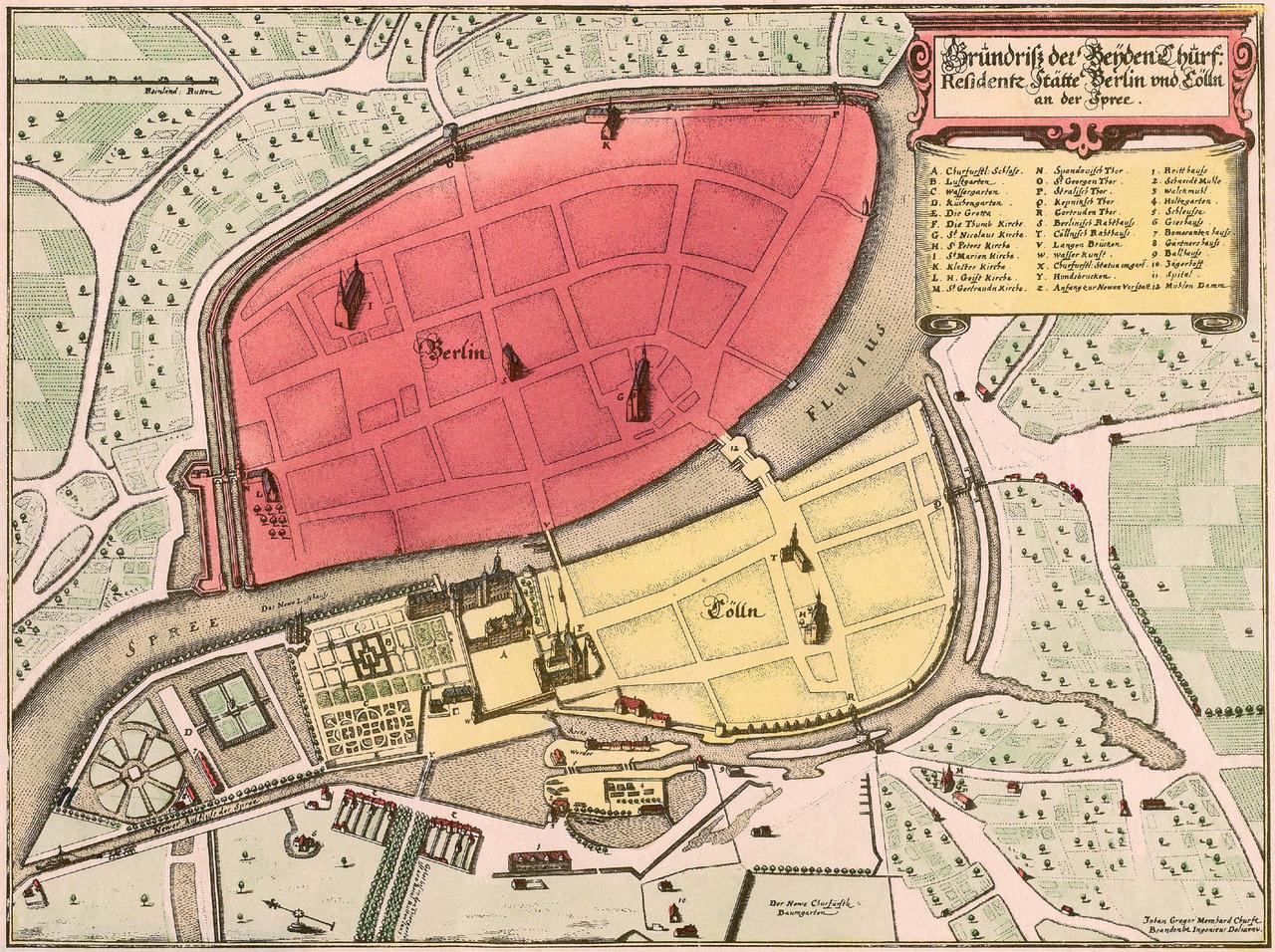
Berlin during the Middle Ages
Right here, history unfolded along the banks of the Spree River, where two small medieval towns slowly took shape and laid the first stones of what would become Berlin. In the 1200s, the settlements of Cölln and Berlin appeared on opposite sides of the river. While many know they eventually joined, fewer realize how different their early roles were. Cölln was a bustling trading island focused on river commerce, while Berlin was more of a crafts and farming community on the eastern shore.
Back then, these towns were surrounded by wooden palisades and trenches—not grand stone walls—reflecting their modest size but serious need for protection. Bandits and rival nobles made security a constant concern. The local church, which still echoes in parts of Berlin’s historic center, was the heart of daily life, guiding people spiritually and socially. A little-known fact is that Berlin’s inclusion in the Hanseatic League wasn’t automatic. The towns had to prove their worth by maintaining fair trade practices and contributing to the league’s collective security.
This membership opened doors to merchants from across Northern Europe and helped Berlin gain a foothold as a trading spot for goods like salt, cloth, and timber. Despite the hardships of medieval life, including outbreaks of plague and political conflicts, these two towns grew closer over time. By the early 1400s, Berlin and Cölln had merged their councils, setting the stage for Berlin’s rise as a regional power.
Any feedback for this story?