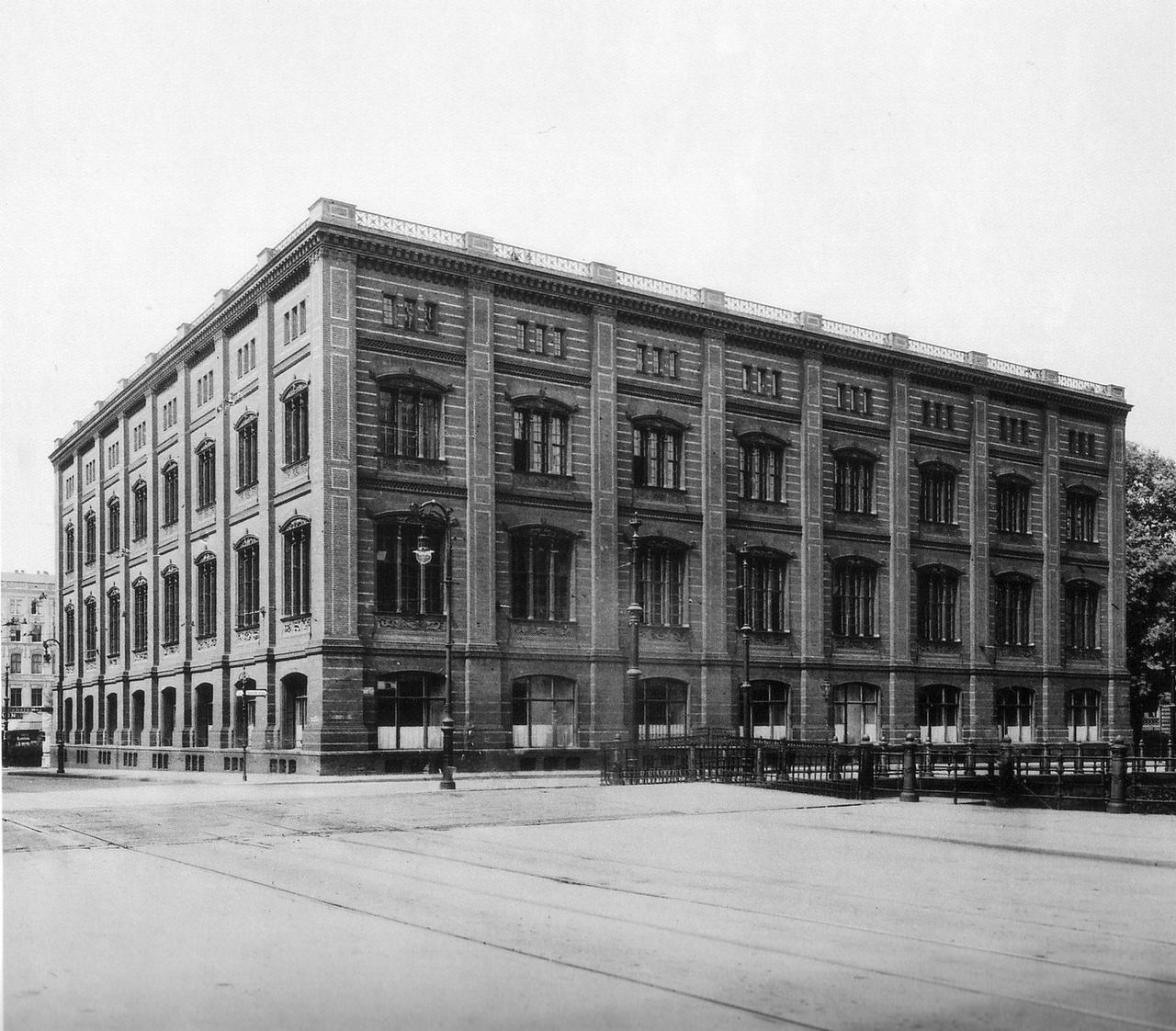
Berliner Bauakademie
In 1799, during the reign of King Frederick William III of Prussia, the Berliner Bauakademie was founded, laying the foundation for a remarkable architectural legacy. This prestigious academy, dedicated to the training of architects and builders, found its iconic home through the visionary designs of Karl Friedrich Schinkel. Schinkel, one of Germany’s most prominent architects, began his design in 1832. By 1836, the Bauakademie was completed, with a groundbreaking brick façade of strict symmetry that set new architectural standards.
Schinkel himself lived in the spacious service apartment on the second floor, an integral part of the building. After his death in 1841, his wife Suzanne was allowed to remain there. Later, their home became the first museum dedicated to Schinkel, which existed until 1873. The Bauakademie continued its educational role until 1884, after which it was repurposed. During World War II, the building suffered severe damage. Following a 1945 bombing raid, it burned down.
Although restoration began in 1951, the East German government ceased funding in 1956, and the building was demolished in 1962. Efforts to rebuild it persisted, and in 2016, the German government allocated 62 million euros for reconstruction. Today, the Bauakademie stands as a symbol of Berlin’s architectural heritage and resilience. Its restoration not only honors Schinkel’s pioneering vision but also inspires new generations of architects.
Any feedback for this story?