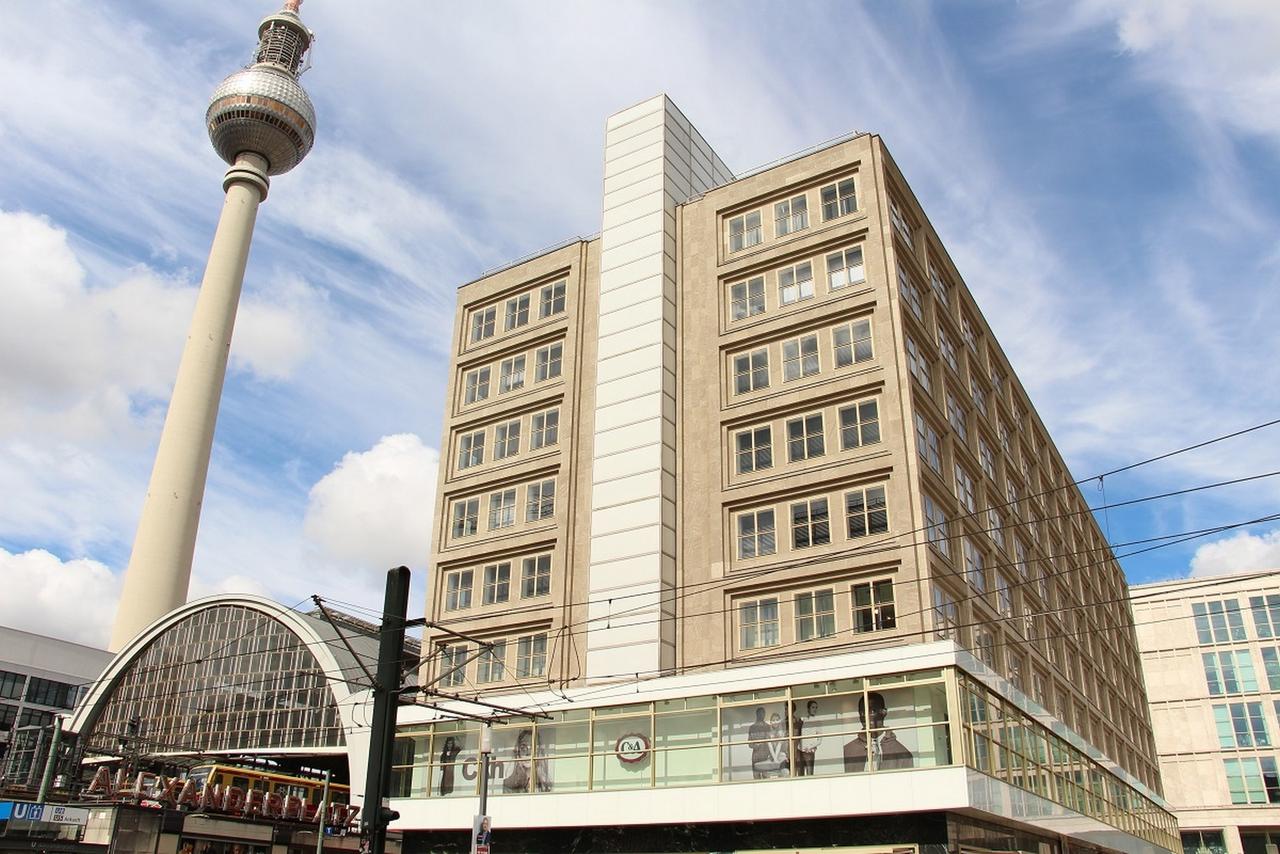
Berolinahaus
Berolinahaus, located on Berlin’s Alexanderplatz, is an icon of early 20th-century architecture. Built between 1929 and 1932, it stands as a prime example of the classical modernism of the Neue Sachlichkeit movement. Architect Peter Behrens’ design was chosen by city planner Martin Wagner, even though Behrens only placed second in the competition. Wagner considered his modernist approach more fitting for the prominent location than the winning design by Hans and Wassili Luckhardt.
Behrens was ahead of his time, equipping Berolinahaus with integrated building services, then a pioneering feature in Germany. Construction lasted only two years, and the building was inaugurated in January 1932. Among the first tenants was the textile chain C&A, which had operated a store on Alexanderplatz since 1911. Adding to its modern appeal, the building included a café on the first floor, accessible by escalator—a rare luxury at the time. Remarkably, Berolinahaus survived World War II largely intact.
During the GDR era, it served as government office space. Listed as a historical monument since 1975, the building remains an integral part of Berlin’s heritage. Its location on Alexanderplatz enhances its significance as a landmark, reflecting the city’s evolution. Today, Berolinahaus attracts visitors for its historical and architectural value, standing as a symbol of Berlin’s resilience and capacity for renewal.
Any feedback for this story?