Bismarck - Nationaldenkmal
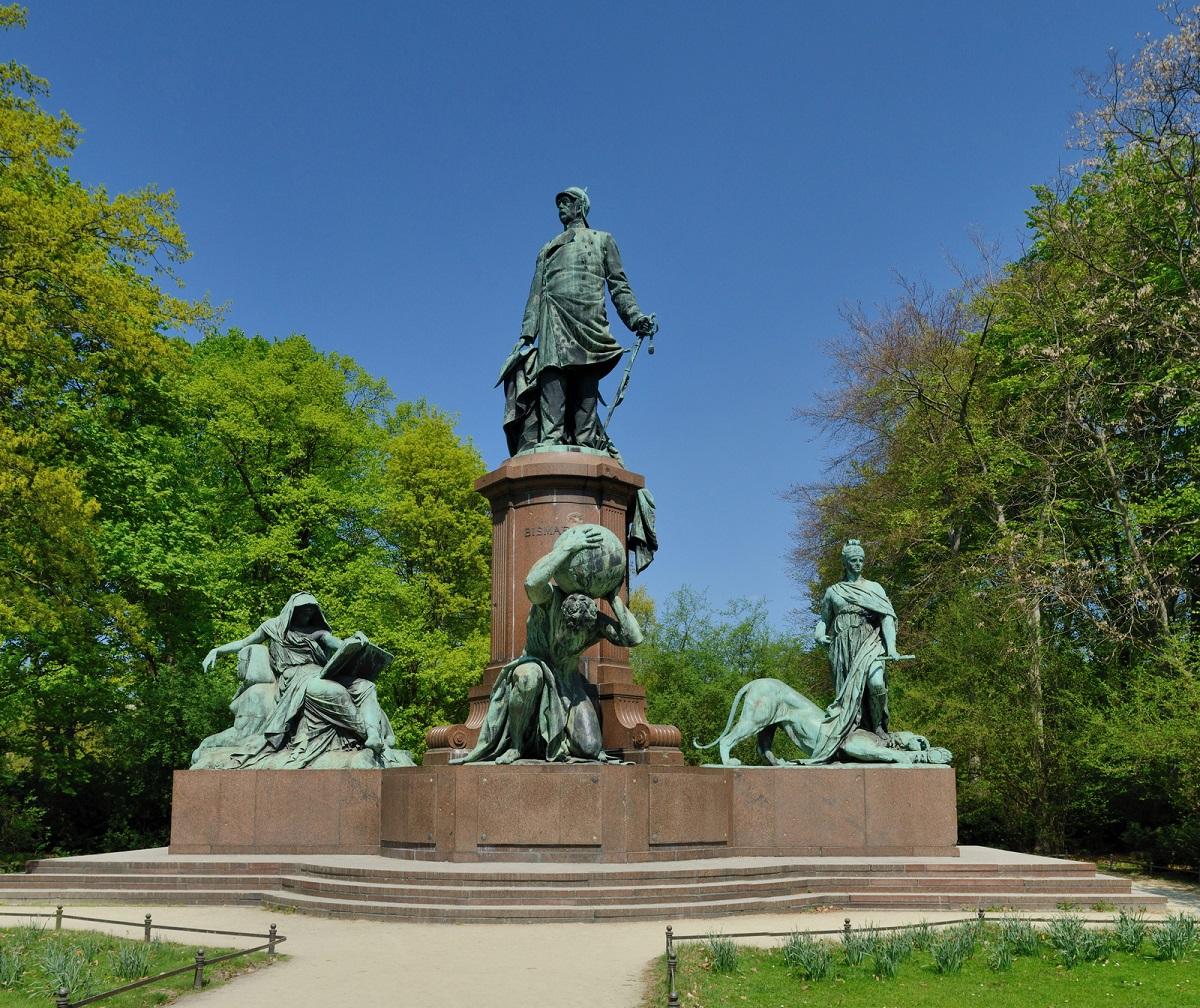
The Bismarck National Monument in Berlin’s Großer Tiergarten impresses with its grand statue of Otto von Bismarck. Yet the monument is more than a tribute, as it is surrounded by four mythological figures that add symbolic depth. In front stands Atlas holding the globe, symbolizing the power of the German Empire. To Bismarck’s right stands Germania, embodying the nation with her shield bearing the German eagle. On the left sits Sibylle, immersed in a history book as a symbol of wisdom and knowledge. At the back, Siegfried with his sword represents military strength and industry.
Originally, the monument stood at Königsplatz, now Platz der Republik, in front of the Reichstag. In 1938, under Adolf Hitler and Albert Speer, it was moved to its present location north of the Großer Stern near the Victory Column. Sculptor Reinhold Begas, famous for his neo-Baroque works, also created a bust of Bismarck in 1886 and a tomb monument in Berlin Cathedral in 1902. The Bismarck National Monument was his last major work, showcasing his ability to combine grandeur with detail.
Despite the destruction of World War II and the division of Berlin, the monument remained intact in the British sector. While many other symbols of Prussian and imperial Germany were lost, it endured as a marker of the city’s history. Today, the monument highlights not only Bismarck’s importance but also the layered symbolism of its surrounding figures.
Any feedback for this story?