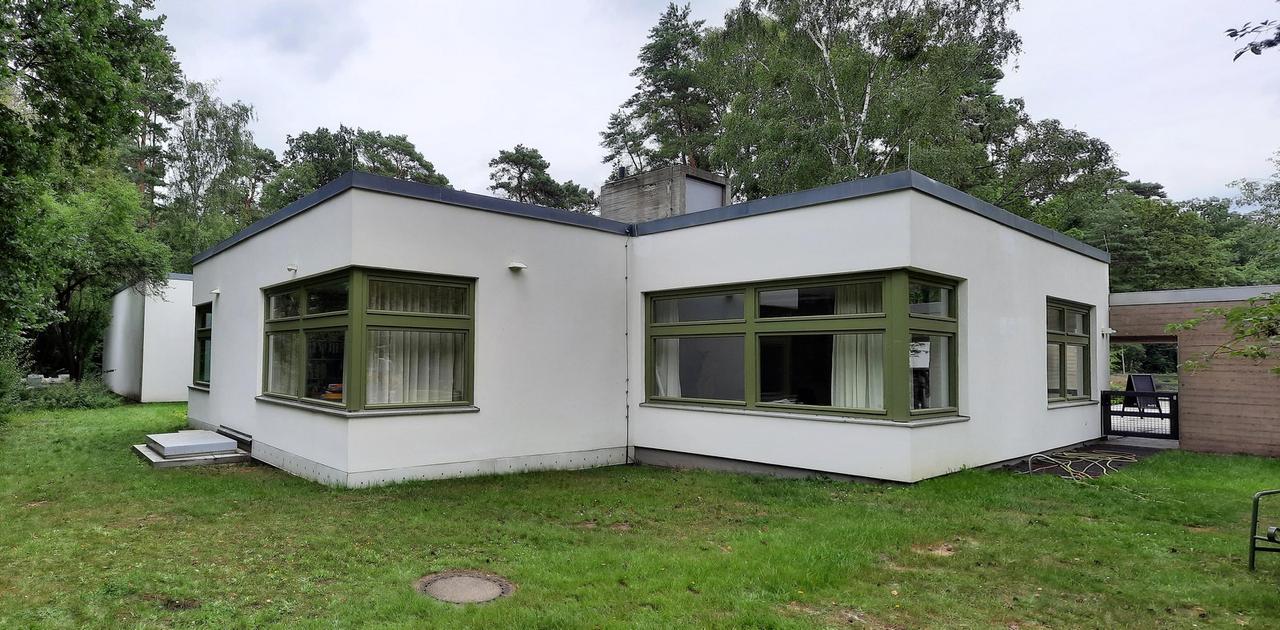
Bridge - Museum
In the quiet Berlin neighborhood of Dahlem lies the Brücke-Museum. Opened in 1967, its foundation rests on the legacy of Karl Schmidt-Rottluff, whose donation created the basis of the collection. Soon afterward, the museum was enriched by a generous gift from painter Erich Heckel, further cementing its significance. Die Brücke, meaning “The Bridge,” was a revolutionary group of expressionist artists founded in Dresden in 1906. They became renowned for their vivid colors, spontaneous painting techniques, and dynamic brushwork.
Their works, often depicting landscapes, nature scenes, and nudes, were created both in the studio and outdoors. The name, coined by Schmidt-Rottluff, symbolized the ambition to build a bridge between tradition and the future of art. The Brücke-Museum itself is an architectural gem, designed by Berlin architect Werner Düttmann (1921–1983). Düttmann left a lasting mark on Berlin with works such as the Akademie der Künste at Pariser Platz, several metro stations, and numerous residential buildings. His design for the museum captures the essence of expressionism, creating a fitting home for the movement’s legacy.
Although the group disbanded in 1913 due to disagreements—particularly regarding a manifesto proposed by Ernst Ludwig Kirchner—their impact on modern art endured. Today, the Brücke-Museum serves as a vibrant monument to their achievements, inviting visitors to immerse themselves in the bold colors and expressive brushstrokes that defined their work.
Any feedback for this story?