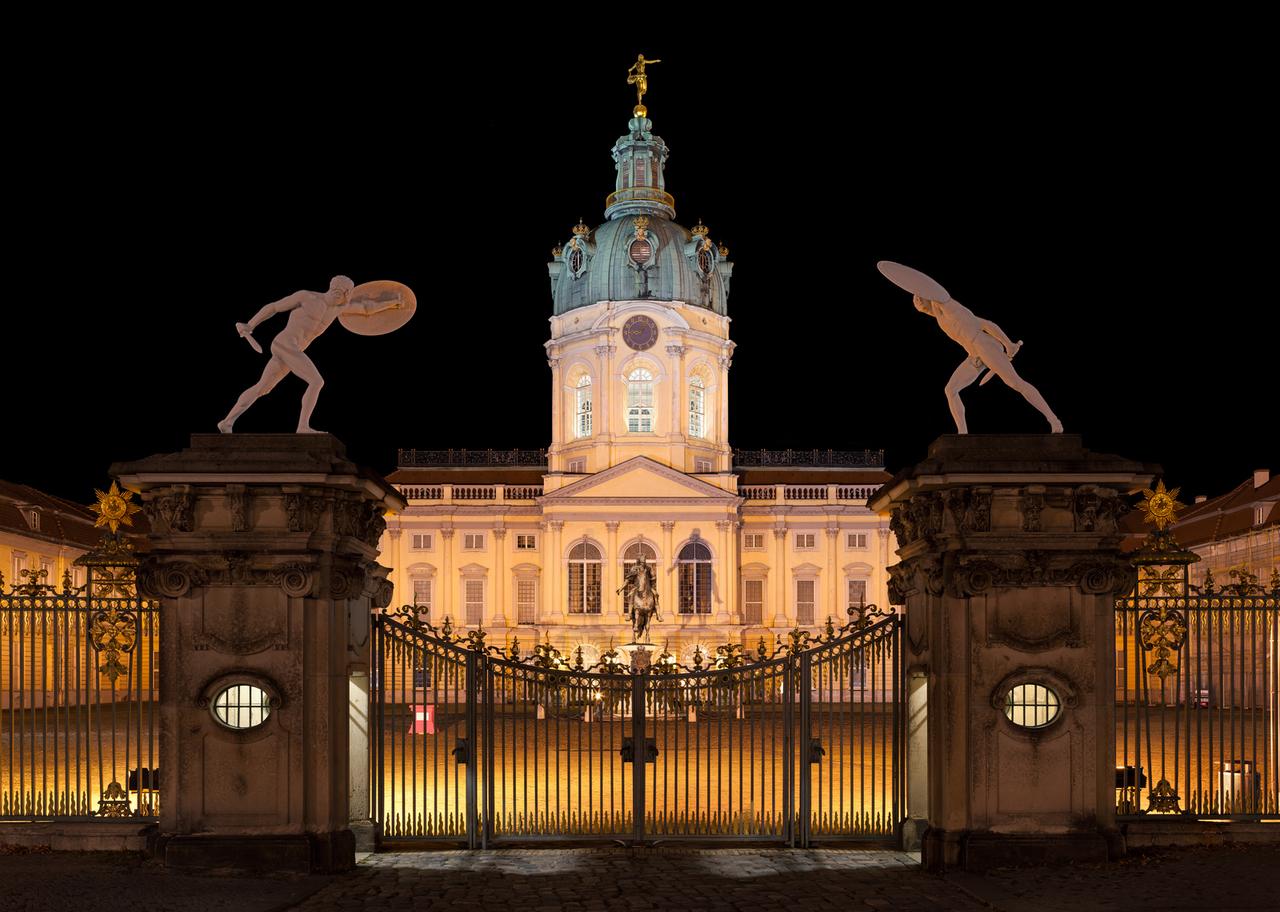
Charlottenburg Palace
Charlottenburg Palace, the largest in Berlin, stands as a grand emblem of Prussian history and architectural mastery. Built between 1695 and 1699 under Johann Arnold Nering, it was commissioned by Sophie Charlotte, wife of Elector Frederick III, as a lavish summer retreat inspired by Versailles. In 1701, Johann Friedrich Eosander expanded the palace, adding the elegant orangery and the dome that now defines its skyline.
Later, Frederick the Great ordered the construction of an eastern wing in 1740, completed in 1747 by Georg Wenzeslaus von Knobelsdorff. This marked the zenith of Charlottenburg’s architectural splendor, though Frederick soon preferred his new residence at Sanssouci in Potsdam. The palace faced devastation during the twentieth century: World War II left Charlottenburg nearly destroyed, with much of its interiors and porcelain collection lost. Yet, meticulous post-war restoration restored its grandeur.
The vast park, based on seventeenth-century French designs, was also carefully reconstructed. Today, it blends Versailles-inspired formality with later English garden elements. Within its grounds stands a belvedere showcasing masterpieces from the Königliche Porzellan-Manufaktur, highlighting Prussia’s artistic legacy.
Any feedback for this story?