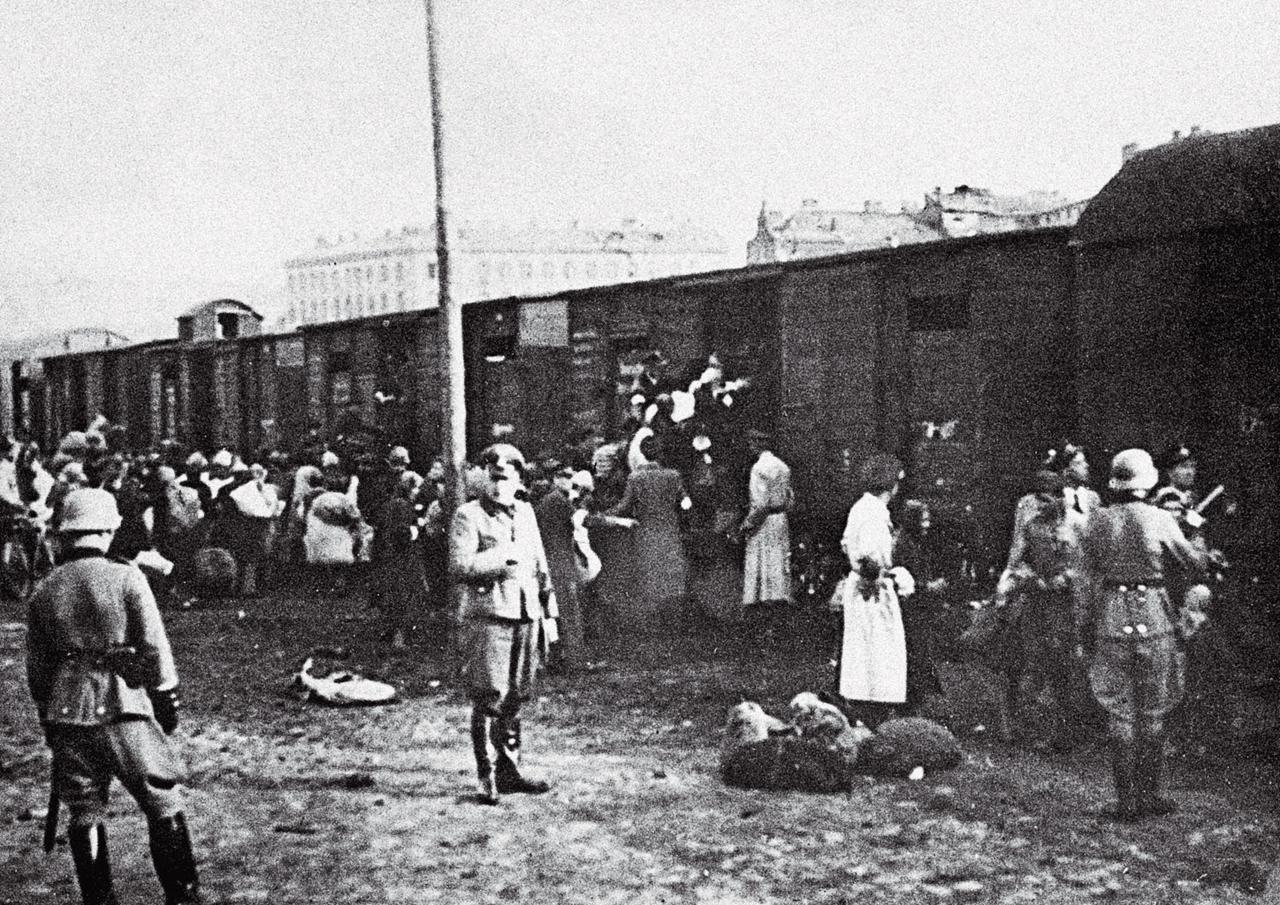
Deportations to Auschwitz – 1943
In 1943, Berlin’s Jewish population faced one of the harshest waves of deportations during the Holocaust. The Nazi regime targeted those who had previously been allowed to work in factories and essential industries, using them for labor before sending them to concentration camps. This operation, called the Fabrikaktion or "Factory Action," began on February 27, and thousands of Jews were arrested and transported, with Auschwitz as the main destination. Survival there was uncertain and harsh.
One of the deportees was Dr. Lucie Adelsberger, a pediatrician dismissed from her position at the Robert Koch Institute because of her Jewish heritage. She continued caring for patients until 1938, but after repeated failed attempts to emigrate, she was arrested on May 6, 1943, and deported to Auschwitz on May 17. Assigned prisoner number 45,171, she worked as a physician in the women’s camp, witnessing immense suffering while providing care whenever possible. The deportations also triggered a rare public protest.
On February 27, relatives of those arrested gathered at the Jewish Community House on Rosenstraße, demanding their loved ones’ release. This protest lasted several days, and about 1,800 people were freed. It became one of the few successful public demonstrations against Nazi policies during the Holocaust. By the end of the war, nearly six million Jews had been murdered across Europe.
In Berlin alone, roughly 60,000 Jews were deported, with only a small number surviving by hiding. Stories like Dr. Adelsberger’s and the Rosenstraße protest highlight both the brutality of the deportations and the courage of those who resisted, however briefly, the machinery of oppression.
Any feedback for this story?