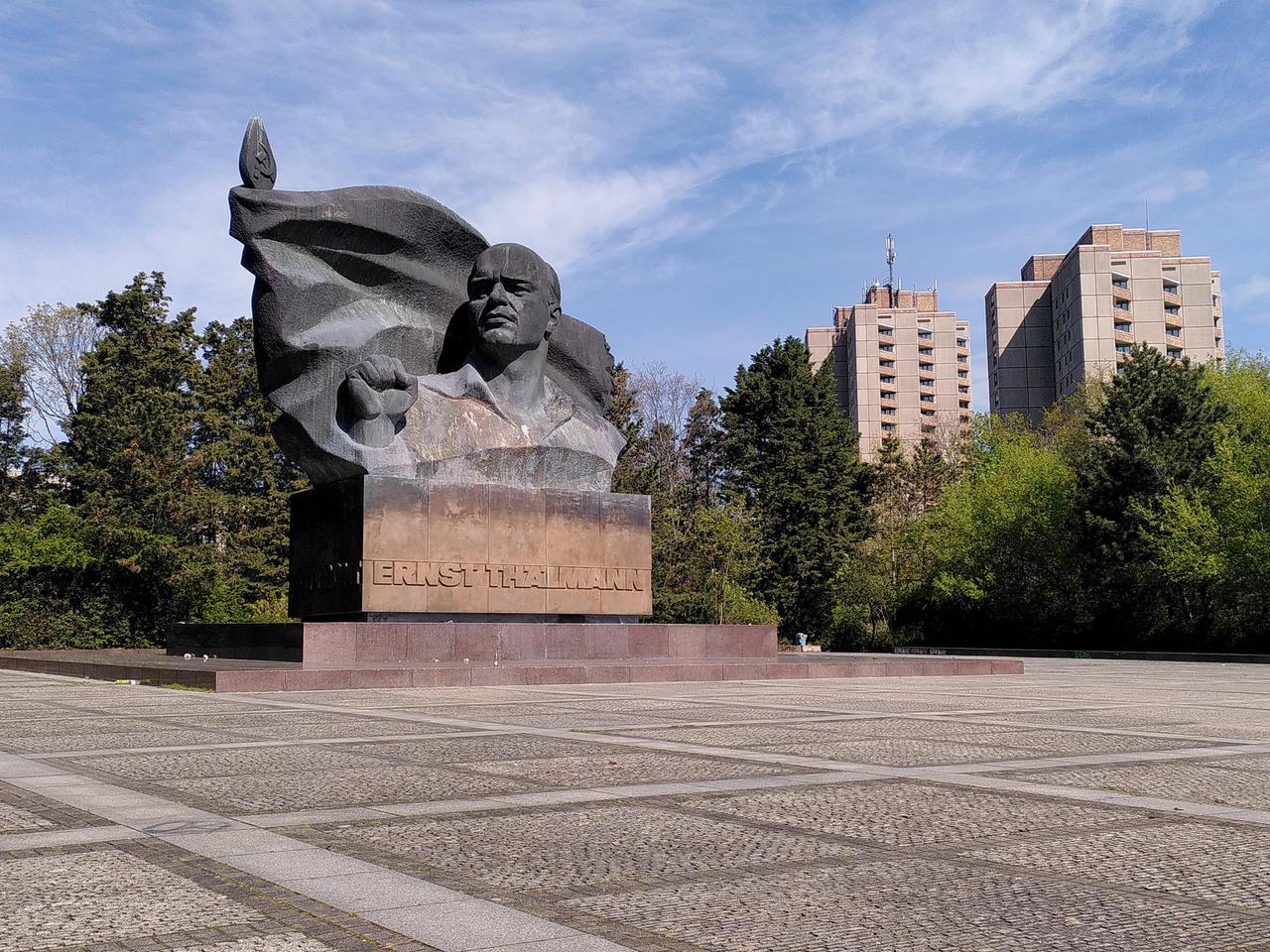
Ernst Thalmann Monument
In the heart of Germany lies a remarkable yet often overlooked monument: the Ernst Thälmann Denkmal in Berlin. Erected in 1986, this colossal statue honors Ernst Thälmann, leader of the German Communist Party who was executed by the Nazis in 1944. Yet the monument tells a deeper story about Germany’s political past and the shifting tides of ideology that shaped its history. Thälmann was a fervent advocate for workers’ rights and socialism, embodying the spirit of the Weimar Republic’s leftist movements. His leadership made him a symbol of the fight against fascism, but also a target.
Shortly after Hitler seized power in 1933, he was arrested and spent eleven years in solitary confinement before being executed on Hitler’s orders. Designed by Soviet sculptor Lev Kerbel, the monument is a striking example of socialist realism. It depicts Thälmann larger than life, with a determined expression and a clenched fist raised in defiance and solidarity. This powerful image was intended to remind East Germans of their revolutionary heritage and the sacrifices made in the struggle against oppression.
After the fall of the Berlin Wall in 1989 and German reunification in 1990, many GDR monuments faced demolition or recontextualization. The Thälmann monument, however, survived and still stands in the Prenzlauer Berg district. Yet its presence remains controversial. Over the years, it has been a site of protests and vandalism, sparking debate in unified Germany: should it be preserved as a historical artifact, or seen as a relic of an oppressive regime unworthy of glorification?
Any feedback for this story?