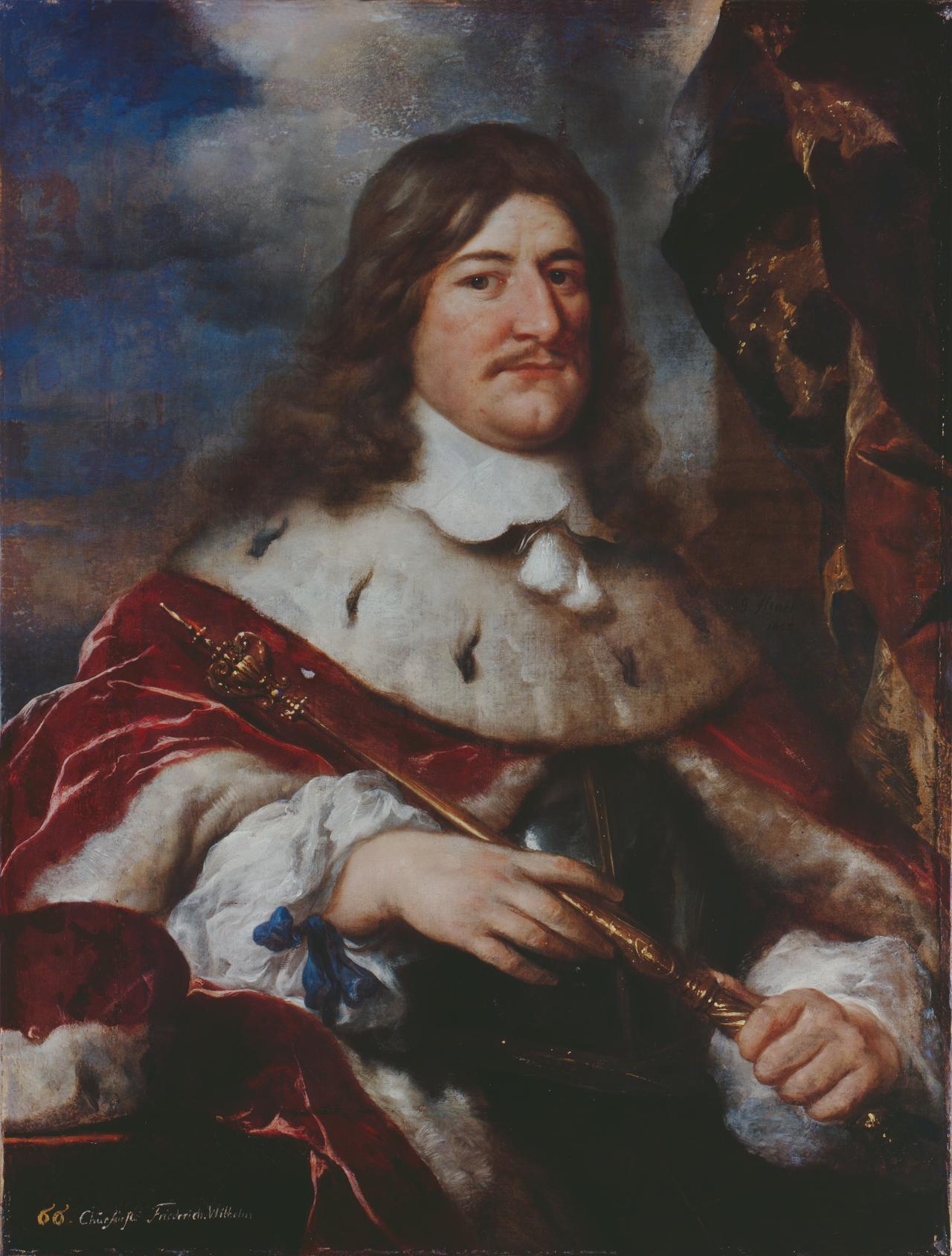
Frederick William reigns – 1640
It all began in 1640, when a young ruler named Frederick William took charge of Brandenburg-Prussia, a land still scarred by the Thirty Years’ War. The cities, towns, and villages he inherited had suffered greatly: some regions had lost up to 90% of their population, and many homes and farms lay in ruins. Life for the people was difficult, and the economy was struggling to recover. Frederick William, later called the Great Elector, faced the enormous task of rebuilding his territories. He understood that a strong, organized state was necessary to protect his people and restore stability.
One of his first moves was to centralize power, reducing the influence of local nobles and creating a government that could make quick and effective decisions. Recognizing the importance of security, he started building a professional standing army in 1644. By the end of his reign, this army had grown to nearly 30,000 men, becoming one of the strongest forces in the region.
Maintaining the army required careful budgeting and planning, showing Frederick William’s commitment to long-term stability. He also focused on politics and alliances to strengthen his position. In 1656, he became a vassal to Sweden over the Duchy of Prussia, but within a year, he had negotiated full sovereignty over the territory. This clever strategy increased his power and laid the foundation for Brandenburg-Prussia to become an influential European state.
Beyond politics and war, Frederick William encouraged economic growth and welcomed skilled immigrants, helping towns and industries to recover. He practiced religious tolerance, which brought new ideas and people to his lands, contributing to cultural and economic revival.
Any feedback for this story?