Garrison city Berlin – 1700s
In the 1700s, Berlin became what was known as a garrison city—a place where a large part of the population consisted of soldiers, with streets and squares shaped around military needs. This did not mean the city was only for war. A garrison city combined civilian life with constant military presence, where parade grounds, barracks, and armories became part of the urban landscape. By the early 18th century, Berlin had about 55,000 inhabitants, and nearly 5,000 of them were soldiers.
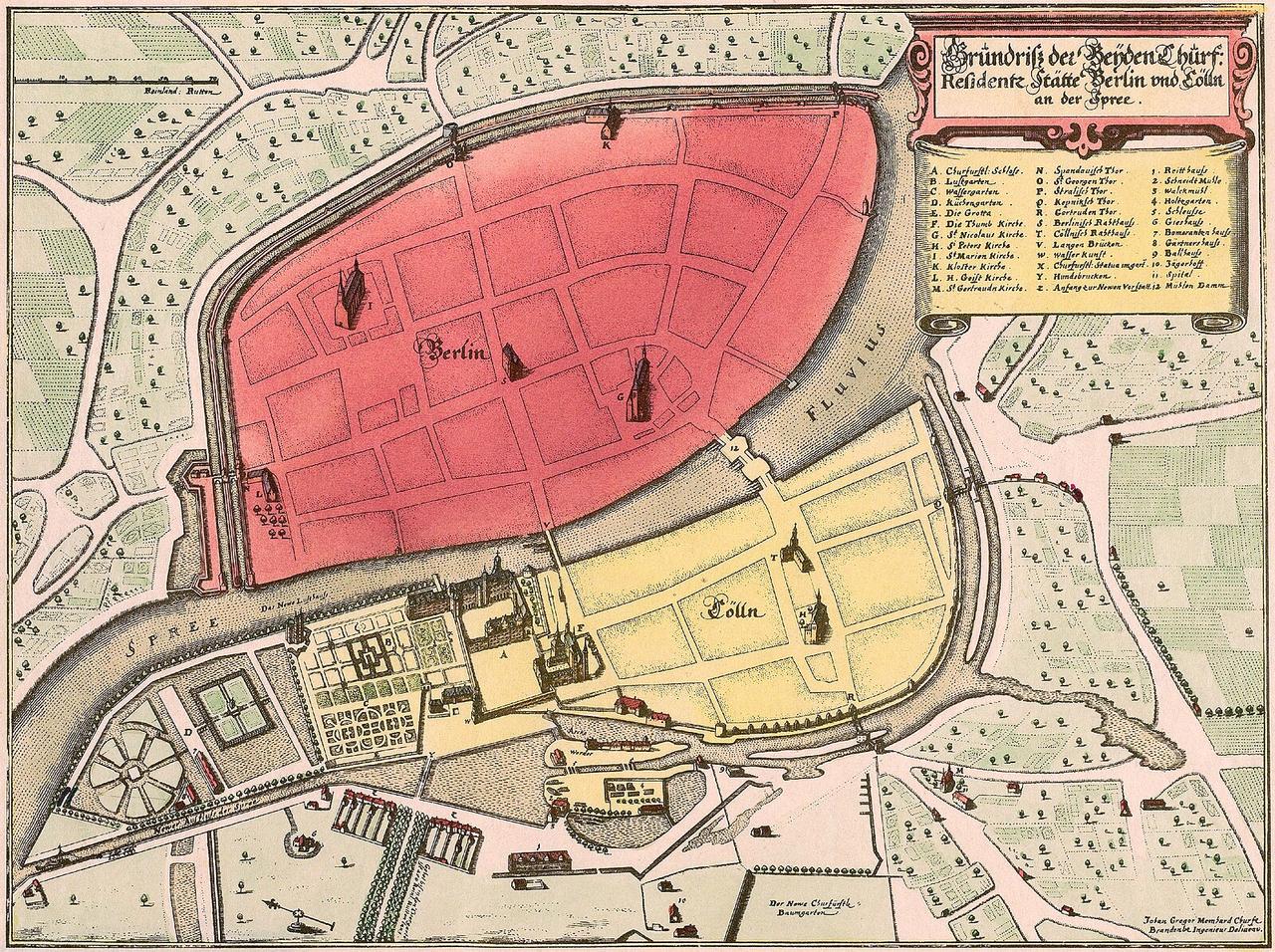
Under King Frederick William I, who ruled from 1713 to 1740, Berlin was transformed into a stronghold of military order. He invested heavily in the army, supported weapon makers, and brought in engineers and craftsmen. The city’s military function, while strict, also encouraged skills, trades, and industries that later fueled Berlin’s growth. The fortifications from medieval times were replaced between 1734 and 1737 by the Berlin Customs Wall.
This was not built to defend the city but to control goods and collect taxes. Fourteen gates led in and out, and nearby squares often served as parade grounds where soldiers trained in plain sight of Berliners. One of the most symbolic sites was the Zeughaus, the great arsenal on Unter den Linden. Built between 1695 and 1730, it stored weapons and displayed war trophies. Its imposing structure reminded citizens daily of the military strength that defined their city.
When Frederick II, later called Frederick the Great, came to power in 1740, Berlin’s military role deepened. By 1755, about one in four residents of the city was a soldier. The balance of daily life, from markets to workshops, coexisted with marching troops and the rhythm of military discipline.
Any feedback for this story?