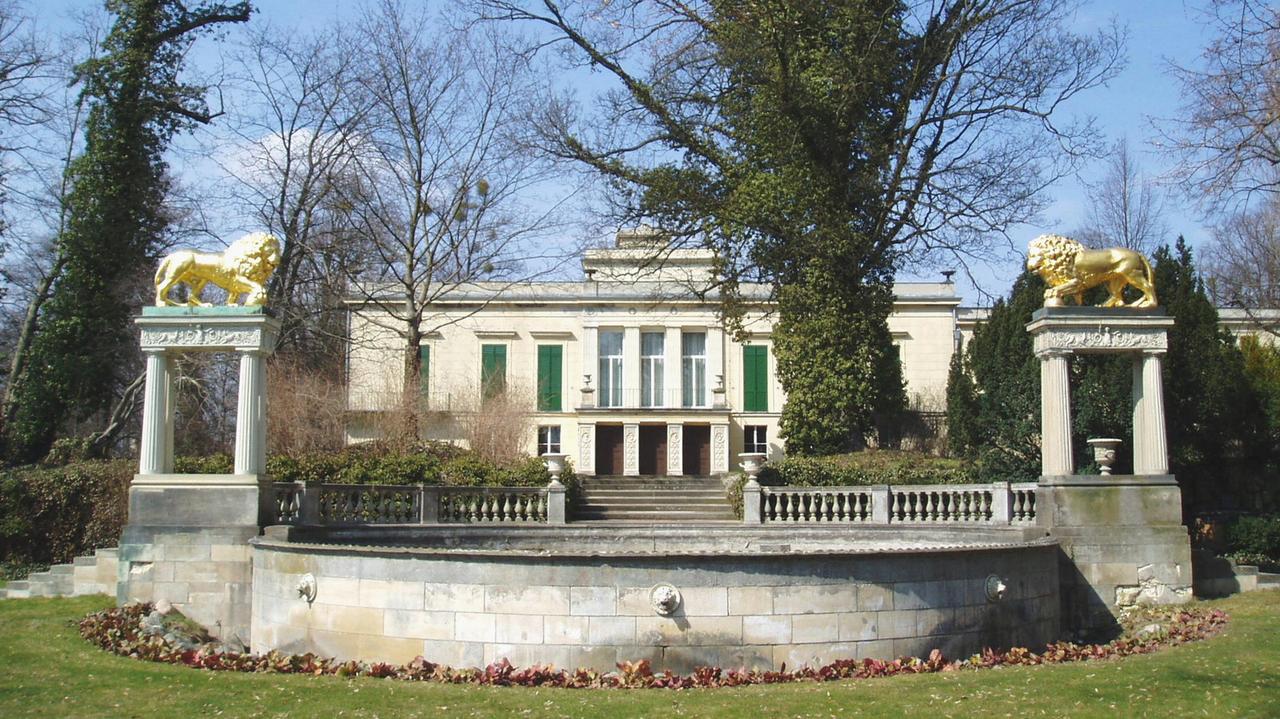
Glienicke Palace
Originally built in 1753, Schloss Glienicke underwent a major transformation in 1825, thanks to the renowned architect Karl Friedrich Schinkel. This summer palace became a beloved retreat for Prince Carl of Prussia. Schinkel, together with landscape architect Peter Joseph Lenné, reimagined the estate, creating a harmonious blend of architecture and nature. The park itself is a work of art, dotted with various structures, including a former coach house that now serves as a charming restaurant.
Adding to the estate’s allure, Ludwig Persius, a notable Prussian architect, designed an orangery and greenhouses. He also created the Kloosterhof, an imitation monastery with Byzantine and Romanesque decorations, giving the park an exotic flair. Schloss Glienicke’s journey includes periods of neglect and rebirth. After Prince Carl’s death in 1883, the palace fell into disrepair. During World War II, it served as a hospital, showcasing its resilience and adaptability.
After the war, it found various new uses until 2006, when part of it became the Hofgärtner Museum, dedicated to the heritage of royal gardening—a fitting nod to its lush surroundings. In 1990, Schloss Glienicke was added to the UNESCO World Heritage List, recognizing its cultural and historical significance. Today, visitors can enjoy its architectural beauty, rich history, and the serene park that once provided a peaceful escape for Prussian royalty. Another nearby landmark is the famous Glienicke Bridge, which was used during the Cold War for exchanging rival spies. Don’t miss the story about this bridge in the Roods app.
Any feedback for this story?