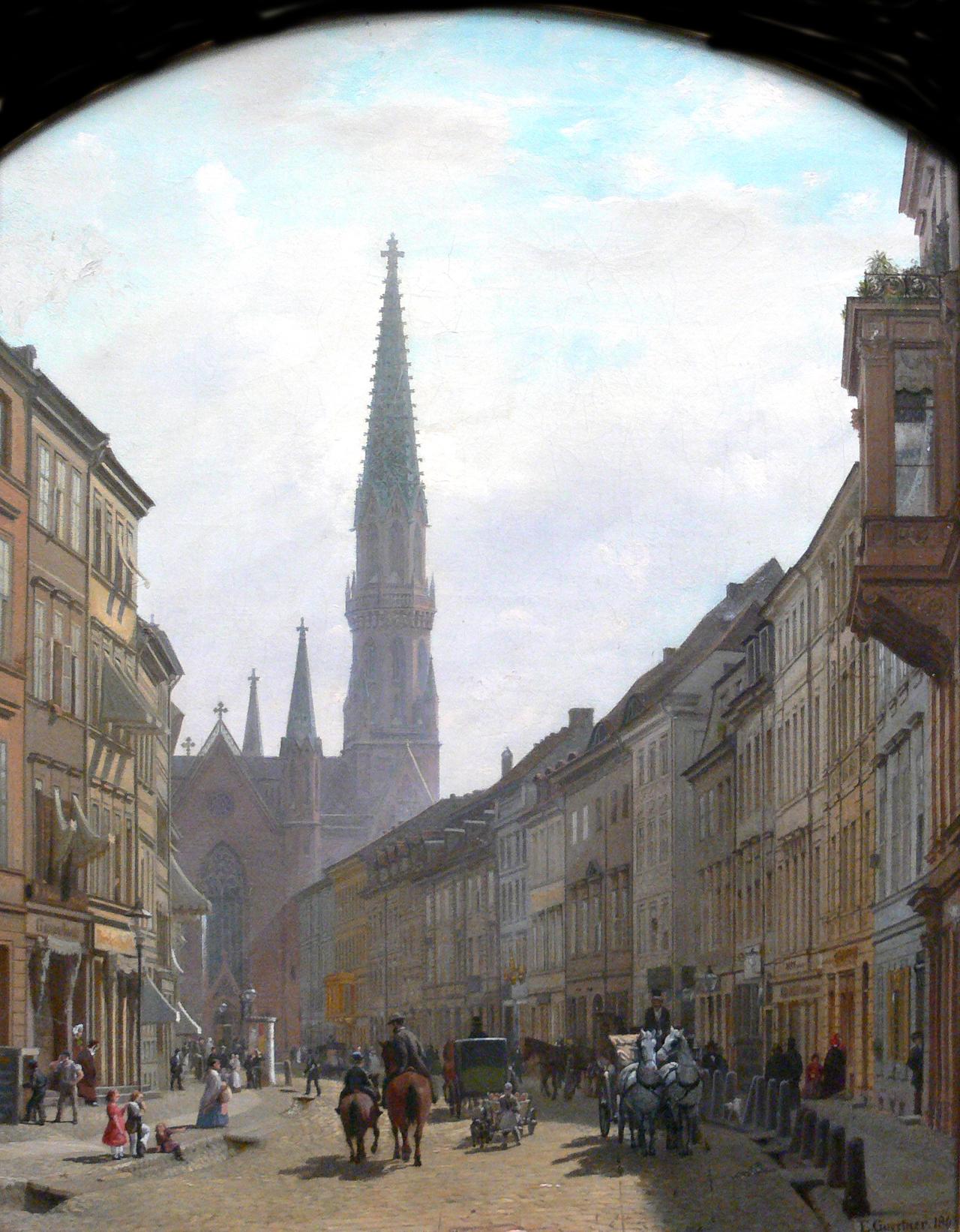
Gottfried von Cölln – 14th century
On this side was Cölln; across the bridge, Berlin. Back in 1337, a church record mentioned Symeon, the parish priest of Saint Peter’s here in Cölln. It’s one of the earliest written traces of this place, a small but clear mark in the city’s timeline. Cölln grew quickly, helped by its spot on the river and at a busy trade route running between Magdeburg and Frankfurt (Oder). Boats came and went, carrying goods through the Spree’s narrow channels.
In the early 1400s, the two towns worked together to build key crossings—first the Mühlendamm causeway, then the Lange Brücke, which would later be known as the Rathausbrücke. Right in the middle of that bridge, they built a shared town hall, a rare symbol of cooperation in a time when most towns guarded their independence. Even so, Berlin and Cölln kept their own councils and rules for more than a century. In 1432, they agreed to a closer union, sharing administration and defenses. It didn’t last forever—ten years later,
Elector Frederick II stepped in and took away much of their independence. By then, the two towns together had about 8,500 people and over 1,000 buildings—churches, hospitals, monasteries, and homes.
Any feedback for this story?