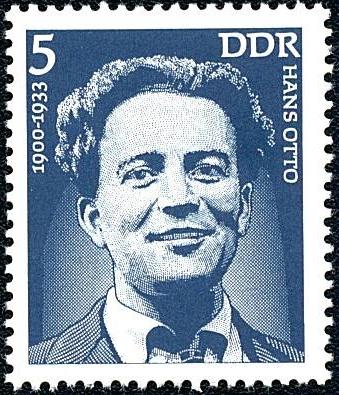
Hans Otto
Hans Otto, a prominent German actor, was born on August 10, 1900, in Dresden. With a profound passion for the performing arts, Otto rose to prominence during the Weimar Republic. He began his career at the Dresden State Theatre, later moving to Berlin to join the Volksbühne, known for its progressive and socially engaged productions. His performances, especially in plays by Bertolt Brecht, were praised for their emotional and intellectual depth.
Yet Otto was more than an artist: he was a committed anti-fascist and member of the KPD (Communist Party of Germany). When the Nazis seized power in 1933, he continued to speak out and engage in resistance activities, despite the growing danger. That same year, he was arrested by the Gestapo, brutally tortured, and ultimately murdered on November 24, 1933. His death, one of the first Nazi atrocities to gain international attention, was silenced within Germany, where Joseph Goebbels banned reporting and even attending the funeral.
The funeral was paid for by fellow actor Gustaf Gründgens, though he did not dare to attend. Much of what is known about Otto’s final days only emerged after 1945, when actor Gerhard Hinze (later Gerard Heinz), arrested alongside Otto, shared his testimony.
Any feedback for this story?