Haus des Lehrers
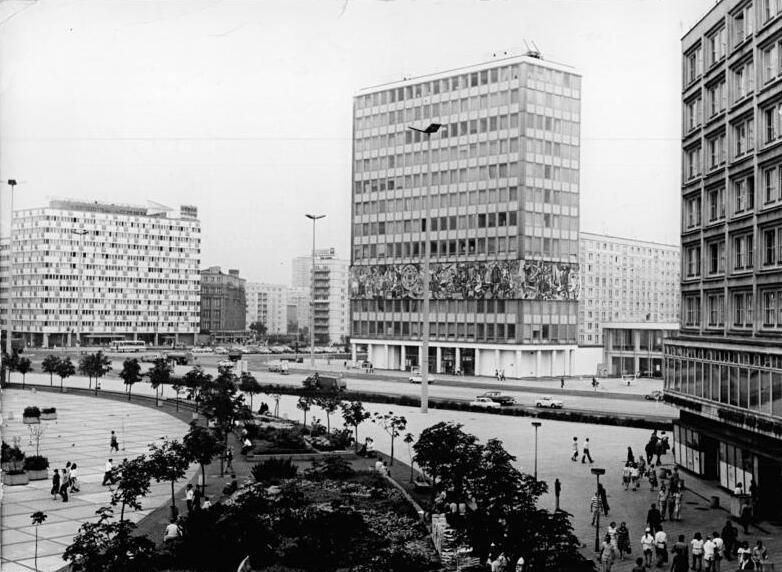
The building standing in front of you is the Haus des Lehrers, meaning "House of the Teacher," and it carries more history than its clean modernist lines might suggest.
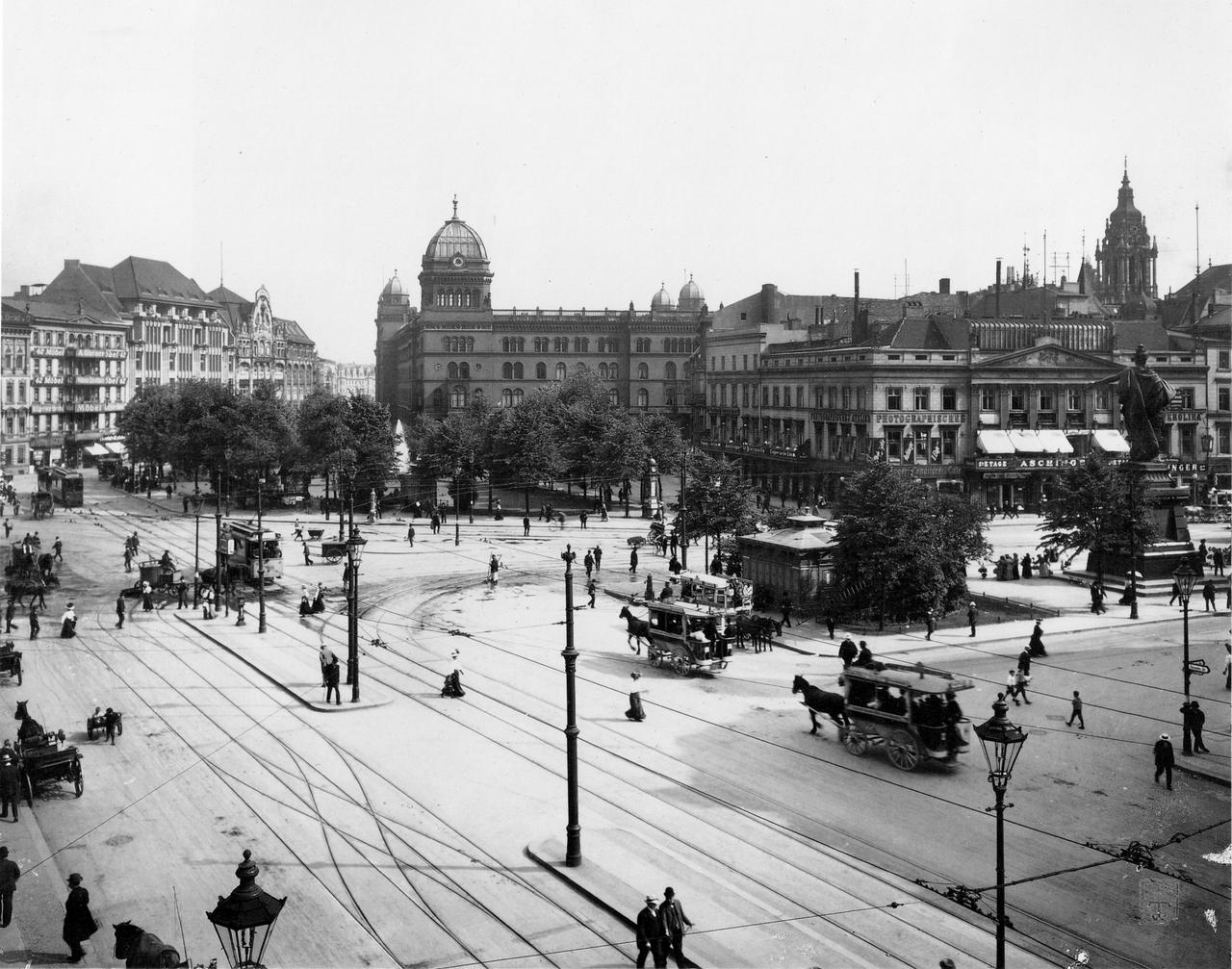
Before the Second World War, this exact spot held the Lehrervereinshaus, a lively meeting place where Berlin's teachers gathered to share ideas and debate. The war destroyed it completely. What rose in its place between 1961 and 1964 was East Germany's first steel-frame skyscraper, a bold statement from a government eager to show the world it was building something new.
Your eye is probably already drawn to that vivid band of color wrapping around the third and fourth floors. That is "Unser Leben," meaning "Our Life," a mural by artist Walter Womacka stretching about 125 meters long and 7 meters high, making it one of the largest murals in Europe. It shows scientists, farmers, factory workers, and families, all painted in the optimistic style the East German state preferred. This is how the government wanted daily life to look and feel.
Inside, the building offered a café, a library, a bookshop, and performance spaces, blending work and culture in one place. After German reunification, a careful restoration in the early 2000s added a rooftop glass pavilion while keeping the original spirit intact. Today the mural still dazzles, even if the ideology behind it quietly faded decades ago.
Any feedback for this story?