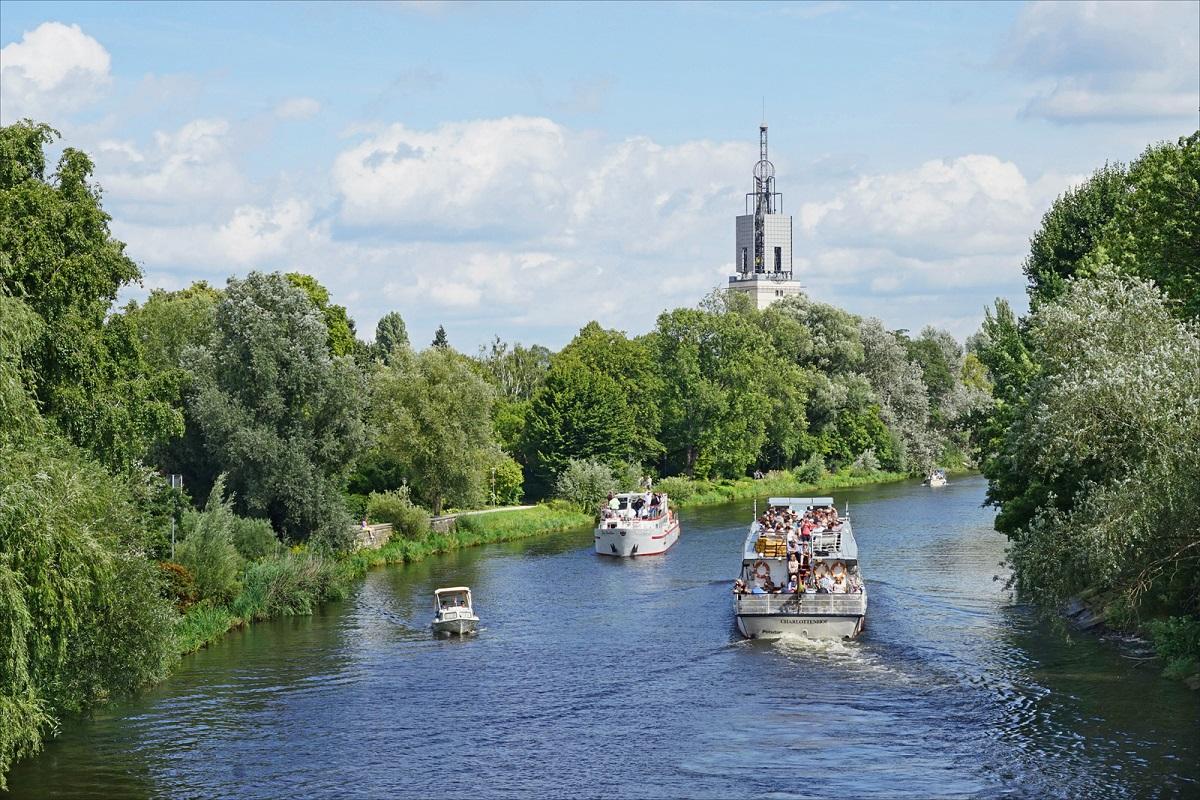
Havel
The Havel River is one of Germany’s most important waterways, known for its natural beauty and historical significance. Rising in Mecklenburg-Western Pomerania, it winds for 325 kilometers before joining the Elbe in Saxony-Anhalt. Interestingly, the direct distance between its source and mouth is only 94 kilometers, underscoring its meandering course. In Berlin, the Havel flows through the city’s western districts, passing landmarks like the Spandau Citadel from the 16th century. Here, the Spree River merges with the Havel, creating a network of waterways and lakes, including the famous Grosser Wannsee.
The Glienicke Bridge, spanning the river, became famous during the Cold War as the site of dramatic spy exchanges. Further south, the Havel reaches Potsdam, Brandenburg’s capital and a cultural hub. In the 19th century, a series of canals were constructed to support commerce and industry. Among them is the Oder-Havel Canal, opened in 1914 by Kaiser Wilhelm II. Stretching 30 kilometers, it links the Havel to the Oder River and includes the Niederfinow Boat Lift, Germany’s oldest operational lift of its kind.
Any feedback for this story?