Hitler seizes power – 1933
In late January 1933, Berlin was a city caught between political unrest and economic hardship, when a decision at the highest level of government changed the country’s path. On 30 January 1933, President Paul von Hindenburg appointed Adolf Hitler as Chancellor of Germany. Many in the political establishment believed they could control him through a coalition of conservative forces. Within weeks, that assumption would prove dangerously wrong.
On the evening of 27 February 1933, the Reichstag building, home to Germany’s parliament, was engulfed in flames. A young Dutchman, Marinus van der Lubbe, was arrested at the scene and accused of setting the fire. While the exact circumstances remain debated by historians, the event gave Hitler the opening he needed. The very next day, the Reichstag Fire Decree was signed by Hindenburg at Hitler’s urging. It suspended civil liberties, including freedom of speech, the press, and assembly, and allowed authorities to arrest political opponents without due process.
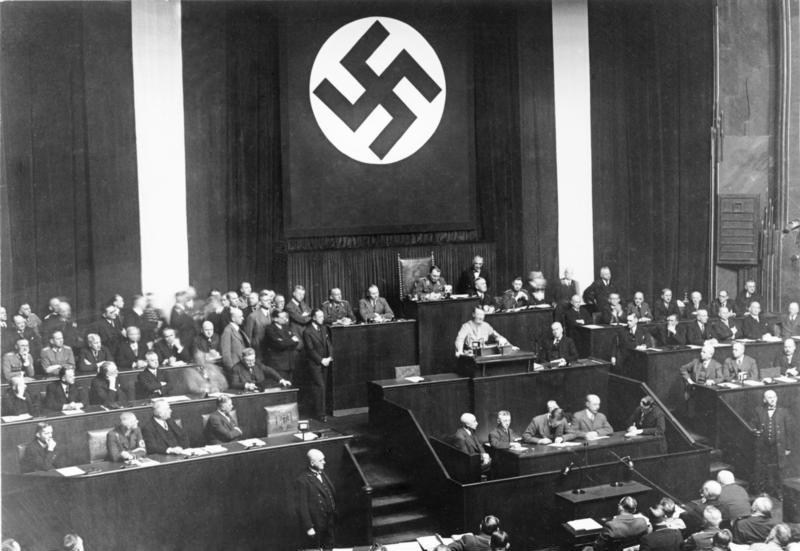
This effectively silenced dissent and cleared the way for the Nazis to target their strongest rivals—the Communists—just before the March elections. What followed was a process the Nazis called Gleichschaltung, or “coordination,” which brought all aspects of public life—political parties, media, trade unions—under their control. The final step came on 23 March 1933, when the Reichstag passed the Enabling Act.
This law gave Hitler’s cabinet the authority to make laws without parliamentary approval, turning his chancellorship into a legal dictatorship. In less than two months, the democratic foundations of the Weimar Republic collapsed. What had started as a calculated political move by conservative leaders had ended with the establishment of a one-party state, reshaping Berlin and Germany for the years to come.
Any feedback for this story?