Jewish Museum
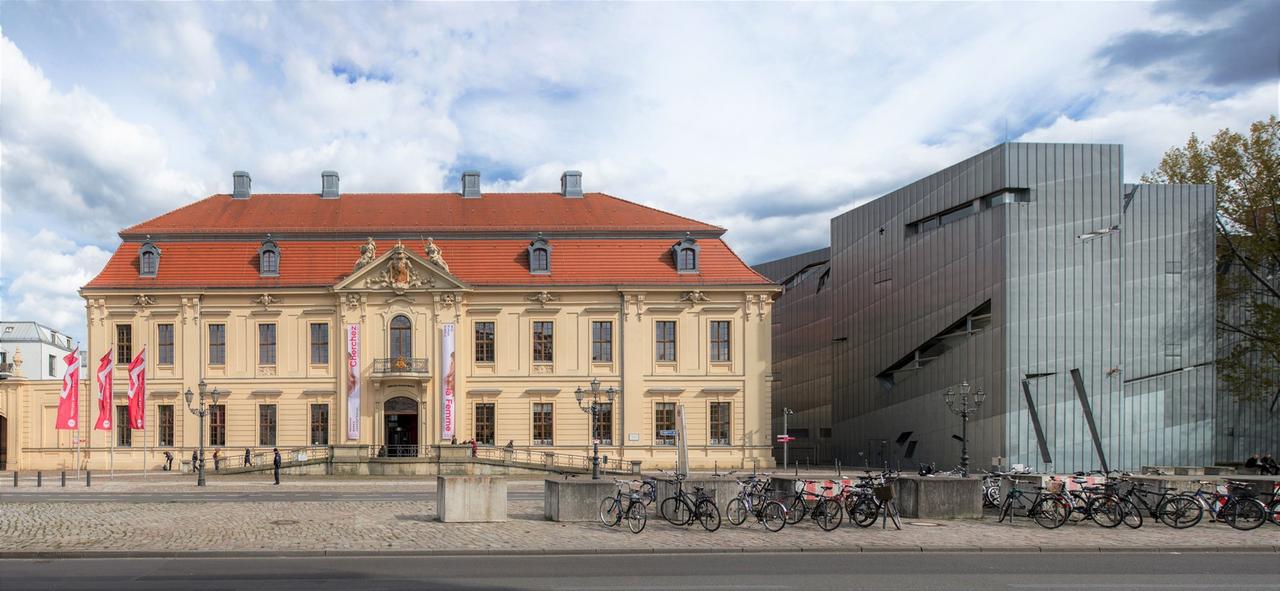
You are standing on Lindenstraße in Kreuzberg, right in front of the Jewish Museum Berlin. Two buildings meet here: the late‑Baroque Kollegienhaus and behind it the sharp geometry of Daniel Libeskind’s extension. Visitors first enter the building from 1735 and descend into the dramatically designed underground museum space. On January 24, 1933, just six days before the Nazi regime came to power, Berlin’s first Jewish Museum opened at Oranienburger Straße 31.
It was shut down in 1938. Today’s museum, opened in 2001, sees itself as the successor to that original institution. It is now the largest Jewish museum in Europe. Its architecture expresses loss, rupture, and remembrance. In the “Voids”—empty concrete shafts without climate control—absence is made physical. The “Garden of Exile,” with its tilted pillars, literally disorients visitors. Together, the building and collection represent over 1,700 years of Jewish history.
Any feedback for this story?