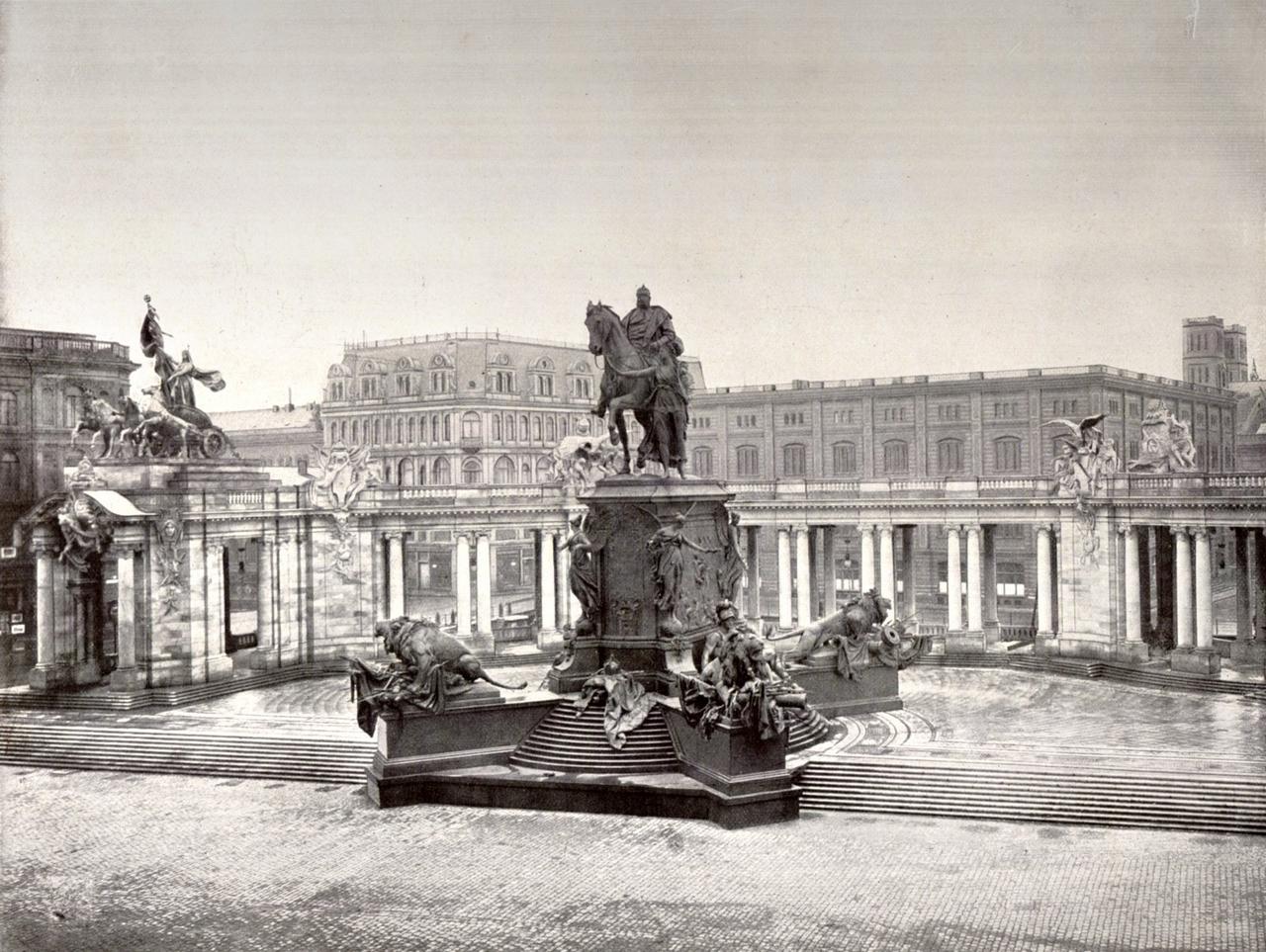
Kaiser Wilhelm Nationaldenkmal
Where you are standing once stood the largest sculpture ever built in Germany: the Kaiser Wilhelm National Monument. This grand neo-Baroque structure was unveiled in 1897 to honor Wilhelm I, Germany’s first emperor and former Prussian king. It dominated the area in front of the Berlin City Palace, towering over the River Spree. Although it survived World War II almost unscathed, the monument was demolished in the post-war years.
For the communists, it symbolized the imperial legacy they sought to erase. Both the City Palace and the monument disappeared, but traces remain hidden beneath asphalt. The pedestal still juts into the Spree, a silent reminder of its past grandeur. Excavations revealed that East German authorities had simply paved over the elaborate mosaic floor rather than removing it. This discovery even halted plans for a new monument because relocating the floor would have been too costly.
Parts of the monument found new homes elsewhere in Berlin: the four bronze lions now guard the big cats’ enclosure at Tierpark Friedrichsfelde, and an eagle with a five-meter wingspan decorates a balcony at the Märkisches Museum. As Berlin continues to transform, these remnants provide a fascinating glimpse into the city’s layered history.
Any feedback for this story?