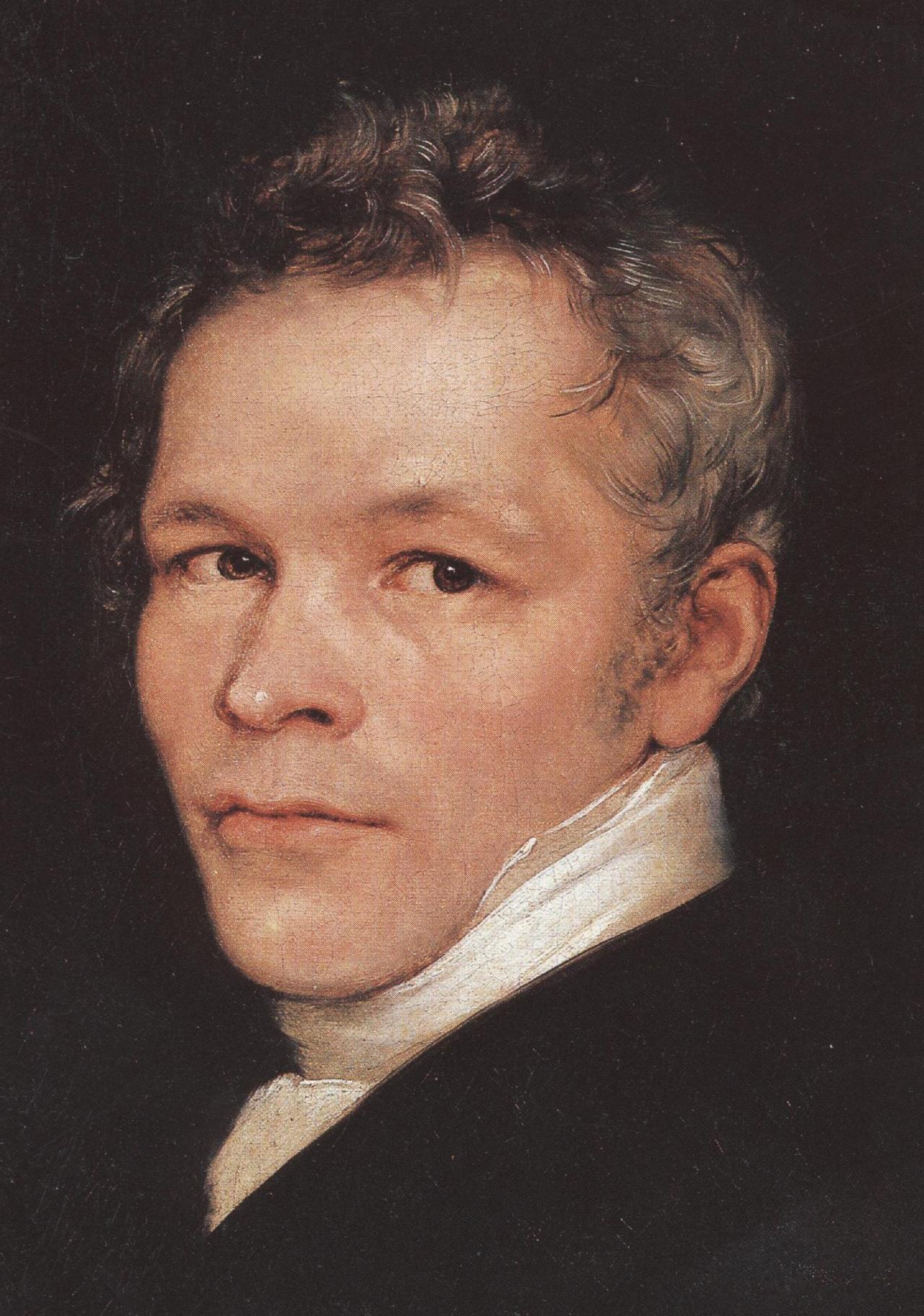
Karl Friedrich Schinkel
The buildings around you on Berlin's grand boulevards and squares didn't happen by accident. They were imagined, planned, and drawn by one person more than almost anyone else: Karl Friedrich Schinkel, the architect who turned a recovering city into a cultural capital.
Schinkel was born in 1781 in the small town of Neuruppin, north of Berlin. After a fire destroyed much of his hometown, he moved to the capital and began studying architecture. His timing turned out to be perfect. After the Napoleonic Wars, Prussia was rebuilding its identity, and it needed buildings that said something about who it was becoming.
His designs blended the clean order of Neoclassicism with a warmer Romantic feeling. The Altes Museum near Museum Island, one of the world's first public museums, was his statement that culture belongs to everyone, not just the wealthy. The Konzerthaus on Gendarmenmarkt and St. Nicholas Church in Potsdam followed the same principle: beauty in service of the community.
Schinkel also shaped theater sets, furniture, and interior design. His reach was everywhere, often invisible, always deliberate. He died in 1841 at just 60, but his drawings essentially became Berlin's blueprint. For a quiet civil servant, that is quite a legacy to leave behind.
Any feedback for this story?