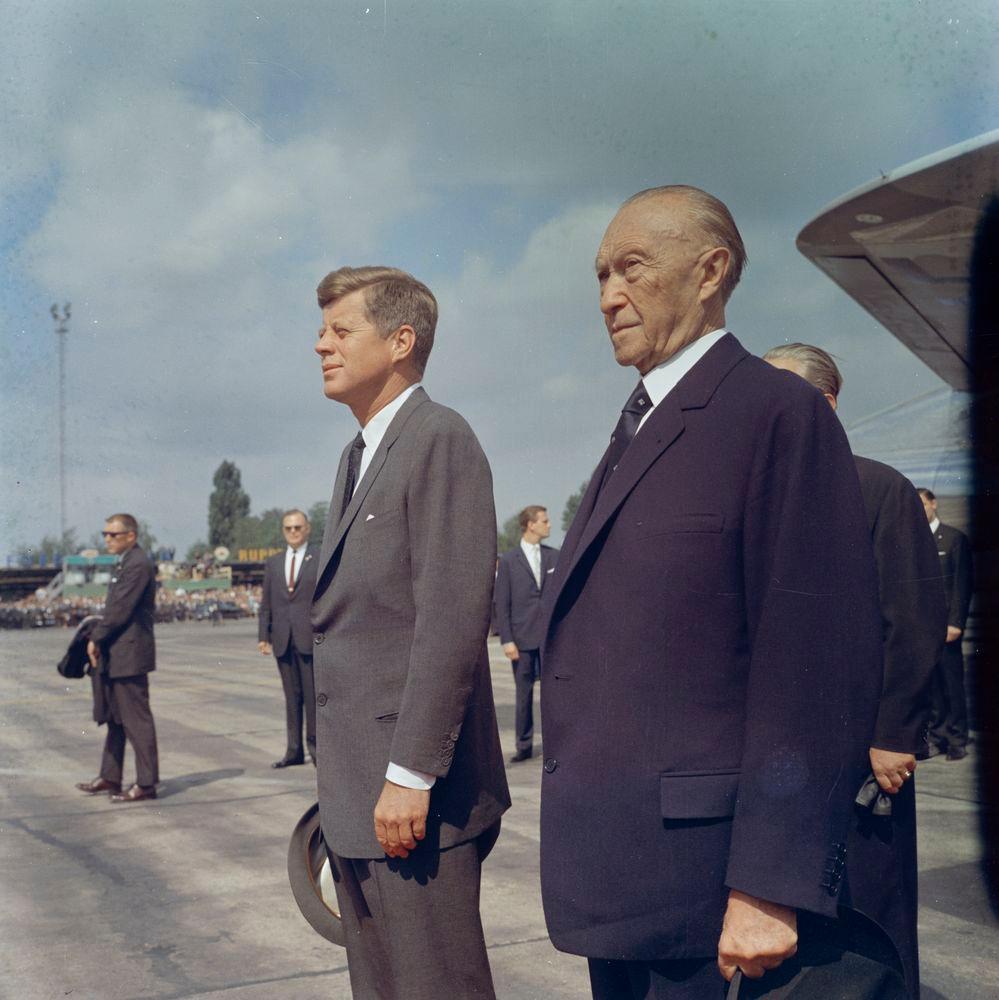
Konrad Adenauer
Konrad Adenauer, born on January 5, 1876, in Cologne, is regarded as one of the most influential figures in German history, particularly for his role in the post-World War II recovery. His path from local politician to the first Chancellor of the Federal Republic of Germany reflects his resilience and vision. His political career began in 1917, when he became mayor of Cologne. He modernized infrastructure, improved public transport, and boosted the economy. The rise of the Nazis in the 1930s abruptly ended this; Adenauer was removed from office and imprisoned.
After 1945, he played a key role in founding the CDU. In 1949, he was elected as the first Chancellor of West Germany, a position he held until 1963. As Chancellor, he focused on recovery, democracy, and Western integration. He restored relations with France and signed the Élysée Treaty in 1963, a milestone in Franco-German cooperation. Adenauer was also an architect of the European Economic Community, the forerunner of the EU. Domestically, he introduced the social market economy, leading to the Wirtschaftswunder: rapid industrial growth, low unemployment, and rising prosperity. Adenauer was known as a pragmatist, consensus-builder, and firm democrat. His alignment of West Germany with the West and NATO was crucial during the Cold War.
Despite personal tragedies, including the loss of his wife and children, he remained committed to his vision. Adenauer died on April 19, 1967. His legacy as a founder of a democratic, prosperous, and integrated Europe places him among the greatest statesmen of the 20th century.
Any feedback for this story?