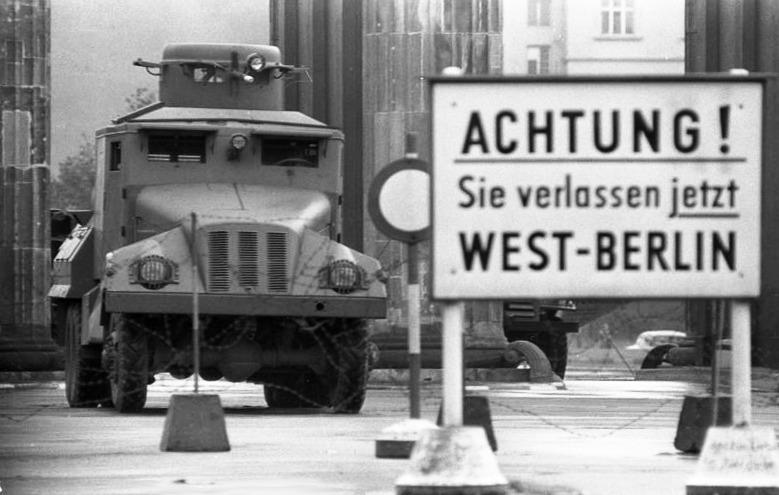
Life in East and West Berlin
The Berlin Wall didn't just split a city in two. It split lives, families, and entire ways of living.
On the eastern side, daily life ran by a different logic. The GDR, East Germany's Soviet-backed government, controlled what factories produced and what shops could sell. Shelves were often bare, and if you wanted a car, you waited years for a Trabant, a small, smoky vehicle that became both a symbol and a joke. Housing meant rows of identical prefabricated concrete blocks called Plattenbau, functional but dreary. The secret police, the Stasi, listened through walls and monitored neighbors reporting on neighbors.
Cross to the West and everything changed. Market shelves overflowed with goods. People drove Volkswagens, Mercedes, BMWs. They read what they wanted, traveled freely, and spoke without fear.
What makes this place so striking is how close it all was. Two utterly different societies existed within shouting distance of each other for nearly 3 decades, separated by concrete, barbed wire, and armed guards.
When the Wall finally fell in 1989, people didn't just celebrate freedom. Many grabbed hammers and started chipping at the concrete themselves, which honestly seems like the most reasonable response imaginable.
Any feedback for this story?