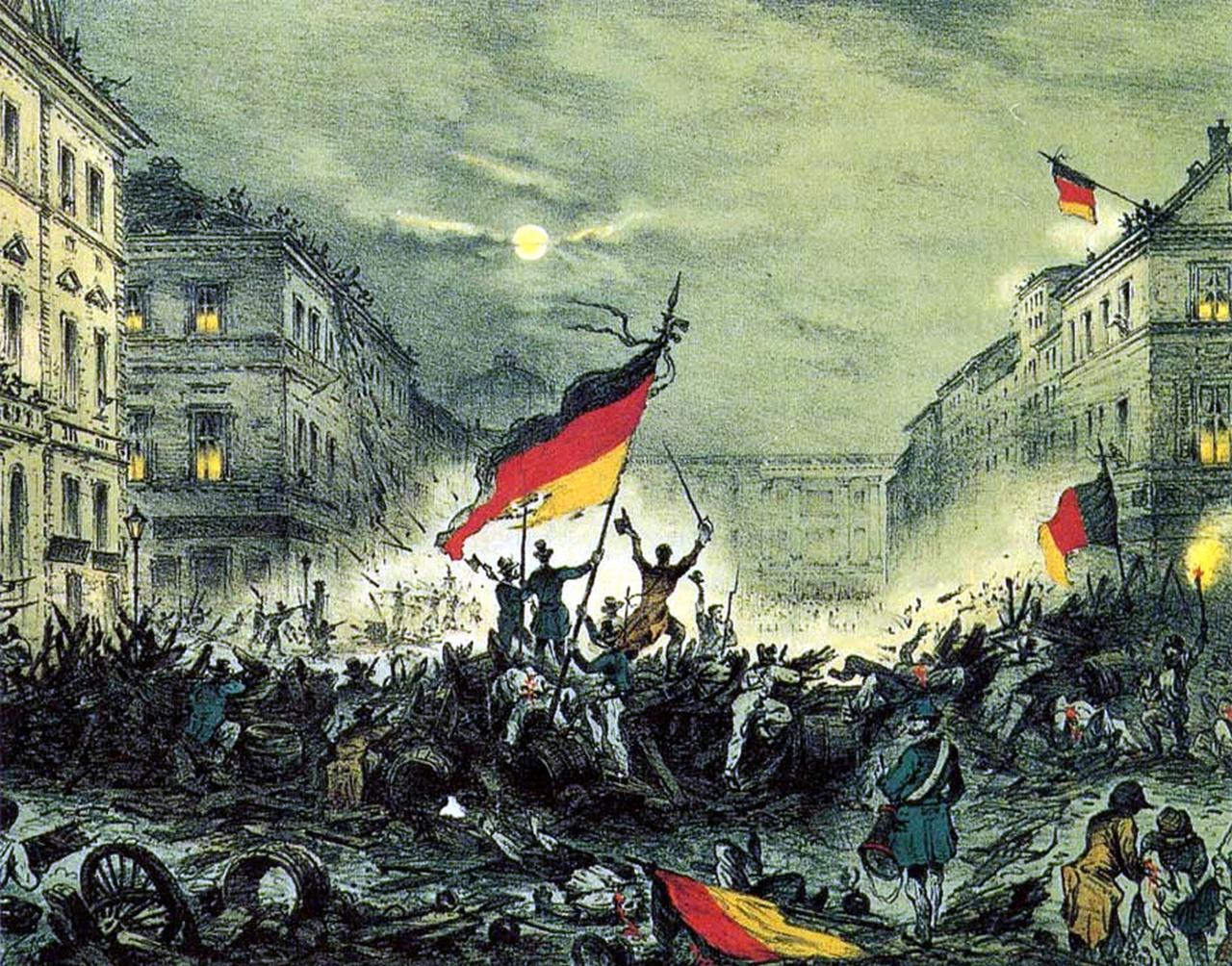
March Revolution
In the spring of 1848, Europe was gripped by revolutionary unrest, and Germany was no exception. The German March Revolution formed part of a broader wave of uprisings across the continent, aimed at overthrowing the old order and establishing a unified German state. Discontent among various social classes fueled the revolution, with widespread calls for political reform and national unity. The revolution began in March 1848, inspired by events in France and beyond. Citizens across the German states took to the streets, demanding freedom of the press, a parliamentary system, and a constitution.
Demonstrations, clashes with authorities, and the rapid spread of revolutionary ideas marked the period. A central figure was Friedrich Hecker, a lawyer and radical democrat from Baden. Together with other reformers, he called for the creation of a republic and organized armed resistance. Despite early successes, such as the formation of the Frankfurt National Assembly, the movement soon faltered. Internal divisions and the resistance of conservative forces, led by the Prussian monarchy and other princes, eroded momentum. By the summer of 1848, the revolutionary flame was dying out; leaders were arrested, and uprisings were brutally suppressed.
A poignant moment occurred at the Deutscher Dom, where 183 coffins of fallen revolutionaries were displayed as a somber reminder of the cost of change. In April 1849, the Frankfurt Assembly adopted a constitution and offered the crown of a united Germany to King Frederick William IV of Prussia. He refused, unwilling to accept a crown “from the gutter” and recognizing the movement’s lack of real power. This refusal marked the end of the revolution, as conservative regimes swiftly reasserted their control and dismantled the gains of 1848.
Any feedback for this story?