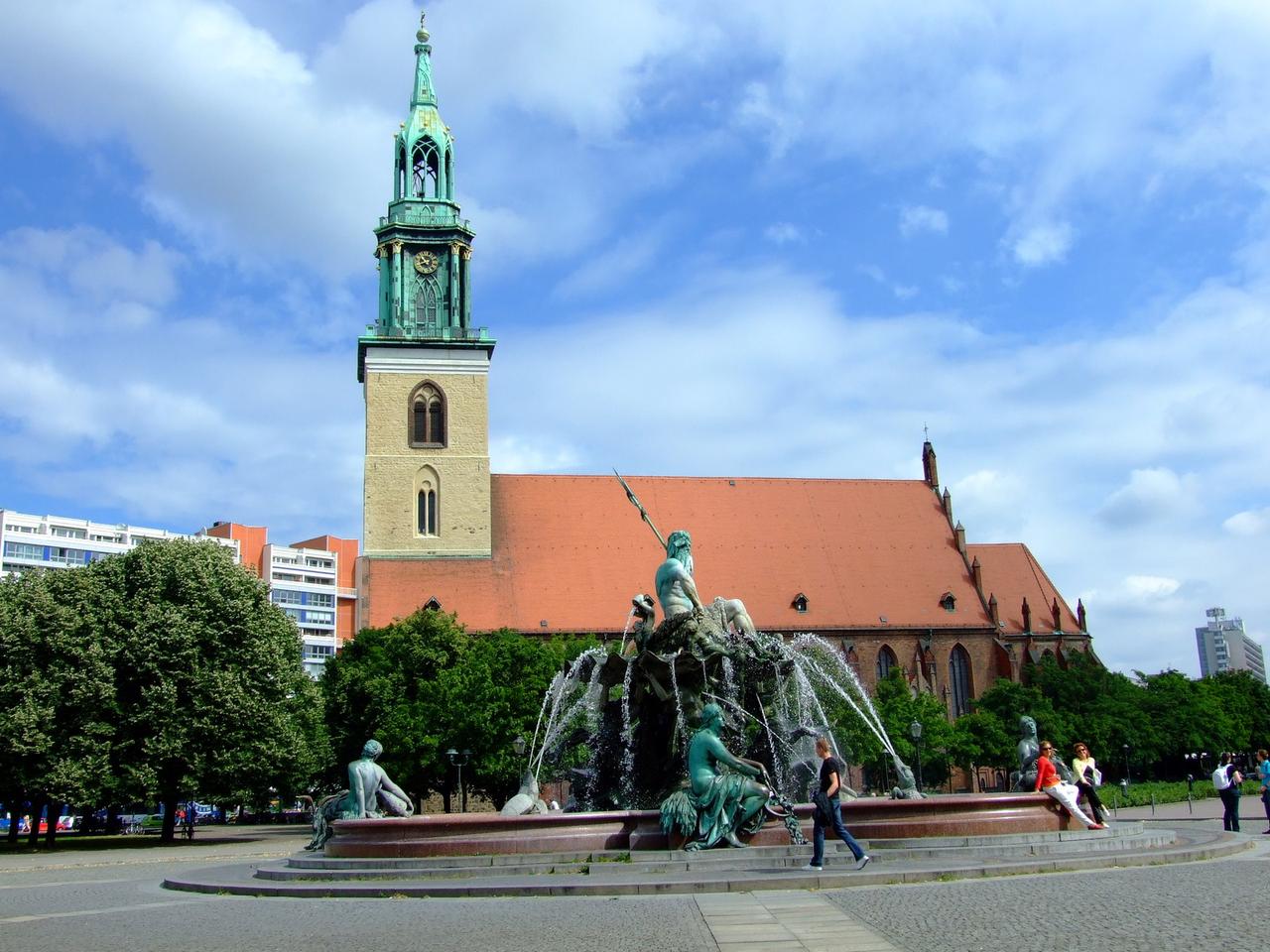
Marienkirche Berlin
That warm, reddish brick building standing near the TV Tower is the Marienkirche, and it has been here since the late 1200s, long before anyone imagined the glass and concrete skyline surrounding it today. When the church was first recorded in 1292, Berlin itself was barely a hundred years old. After two devastating fires in the late 1300s, it was rebuilt in brick, the same material giving it that distinctive earthy glow you see right now.
Step inside and you'll find something most visitors walk straight past: a 22-meter fresco called the Dance of Death, painted around 1485. It shows skeletons leading figures from every layer of society, a bishop, a merchant, a humble farmer, into a final dance. In a time of plague and constant hardship, this wasn't decoration. It was a warning.
Look closer and the details keep rewarding you. A bronze baptismal font from 1437, held up by carved dragons. An alabaster pulpit crafted by the sculptor Andreas Schlüter in 1703. A Baroque altar adorned with paintings by Bernhard Rode.
During World War II, the surrounding neighborhood was almost entirely destroyed. Marienkirche survived, damaged but standing. Restored in the 1950s, it still holds services and concerts today, a genuinely living building in a city that has had to rebuild itself more than once.
Any feedback for this story?