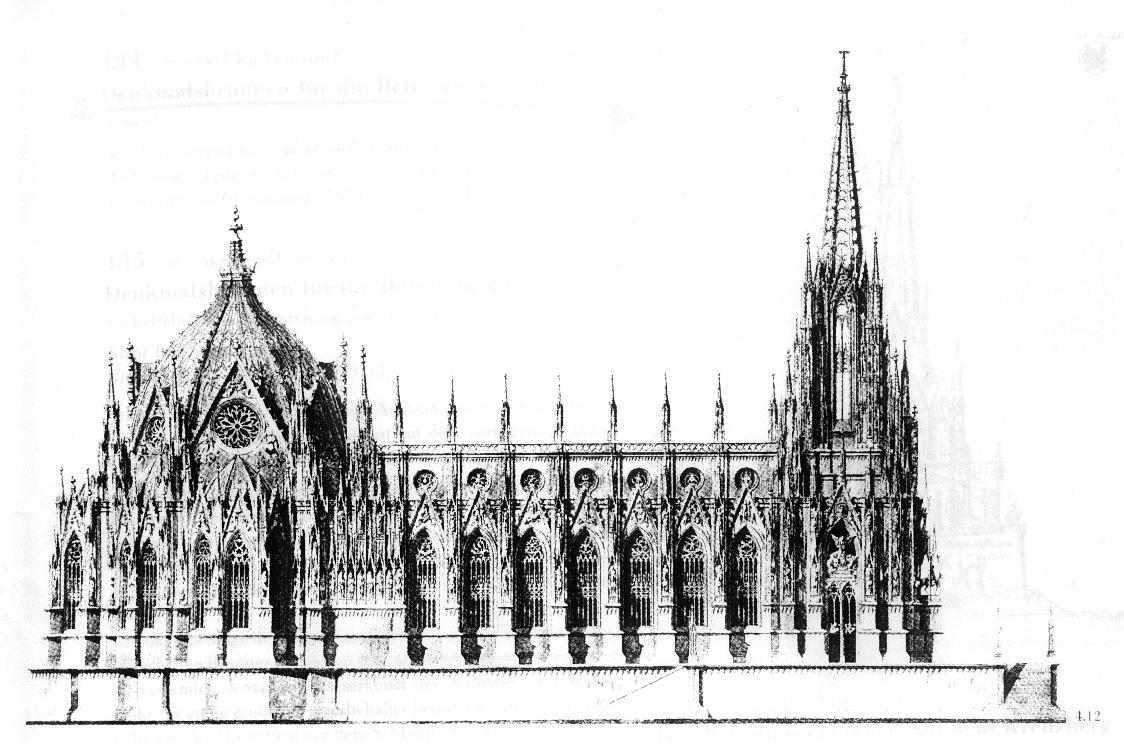
Nationaldenkmal Kreuzberg – 1821
On the Kreuzberg hill in Berlin, a prominent cross rises above the city, marking the site of the Nationaldenkmal für die Befreiungskriege, built to commemorate the Wars of Liberation against Napoleon. Its foundation stone was laid in 1818 by King Friedrich Wilhelm III, under the design of architect Karl Friedrich Schinkel. The monument was inaugurated on March 30, 1821, and the hill was named Kreuzberg after the Iron Cross that crowns the structure. The design includes twelve niches, each containing a statue representing a significant battle from the Wars of Liberation.
Sculptors Christian Daniel Rauch, Friedrich Tieck, and Ludwig Wichmann created the figures, which were cast in iron by the Royal Prussian Iron Foundry. At around 66 meters above sea level, the monument was the highest point in central Berlin at the time, making it a visible landmark for the city. As Berlin grew in the late 19th century, the monument's visibility was carefully preserved. Authorities restricted building heights nearby, and between 1875 and 1879, the structure was hydraulically raised by 8 meters to maintain its prominence amid the developing urban landscape.
Today, the Nationaldenkmal stands within Viktoriapark, a public green space created in the 1880s. The park features a 24-meter-high artificial waterfall, inspired by the Zackelfall in the Krkonošsko-jesenická subprovince. It is a place where locals and visitors gather, not only to enjoy the view and greenery but also to reflect on Berlin’s history and the events commemorated by the monument.
The Nationaldenkmal for the Wars of Liberation remains an enduring symbol of Prussia’s efforts during the Napoleonic era, connecting modern Berlin with the struggles and victories of the early 19th century.
Any feedback for this story?