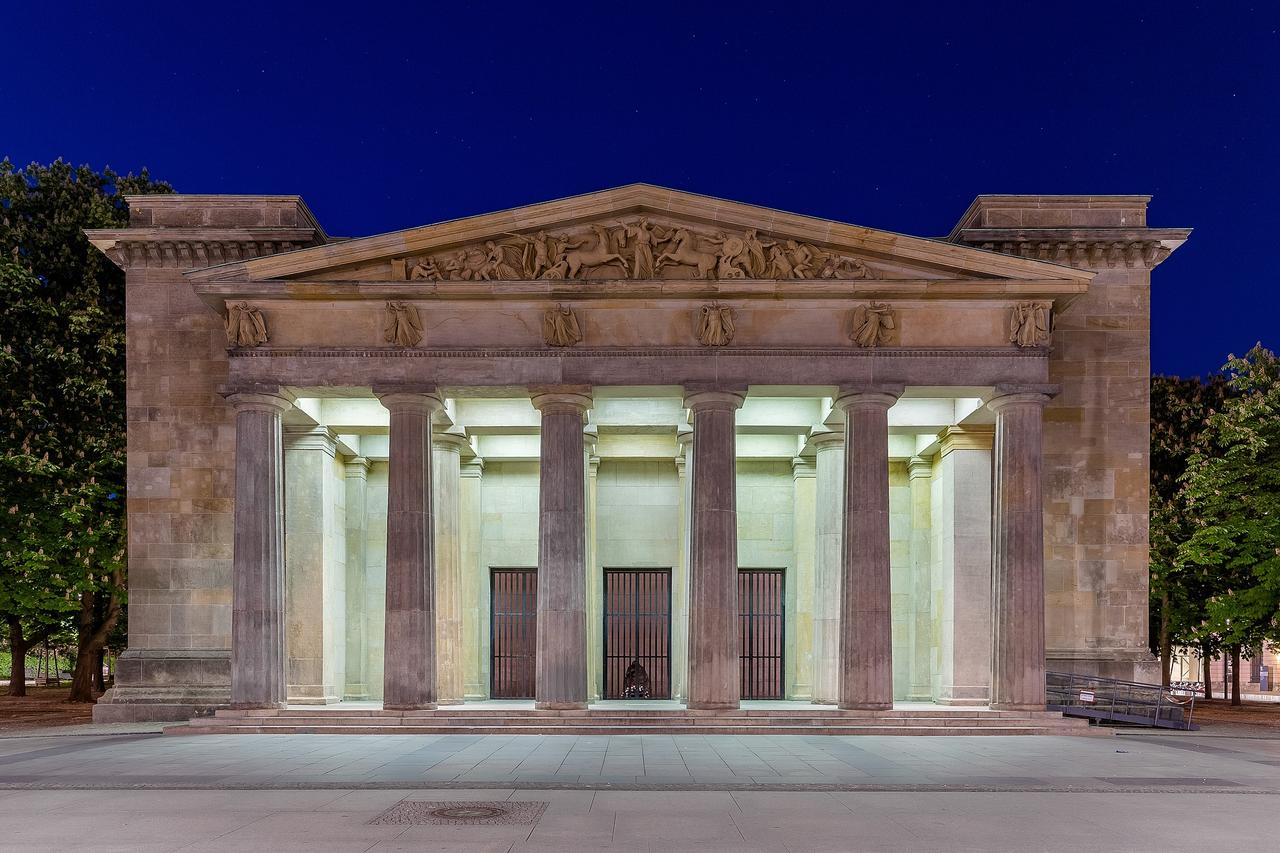
Neue Wache
Beneath your feet, buried under the floor of this quiet memorial, lie two people. One is an unknown soldier. The other is an unknown victim of a Nazi concentration camp. No grave markers. No names. Just the stone floor you walked in on, and the remains of two human beings beneath it.
The building itself is spare and solemn, a former royal guardhouse turned into Germany's central memorial for victims of war and tyranny. Look up at the circular opening in the roof. It was left open deliberately. Rain falls through it. Snow drifts in. Cold air settles on the sculpture below, a mother holding her dead son. That exposure to the elements is the whole point: suffering doesn't stop for the weather.
The sculpture is the work of Käthe Kollwitz, one of the most powerful German artists of the 20th century. The Nazi regime banned her work, calling it degenerate. What makes her story particularly painful is that she wasn't creating abstract ideas about loss. She lost her son Peter in World War 1, and then her grandson Peter in World War 2. The same name. Two wars. A lifetime of grief folded into one image.
Any feedback for this story?