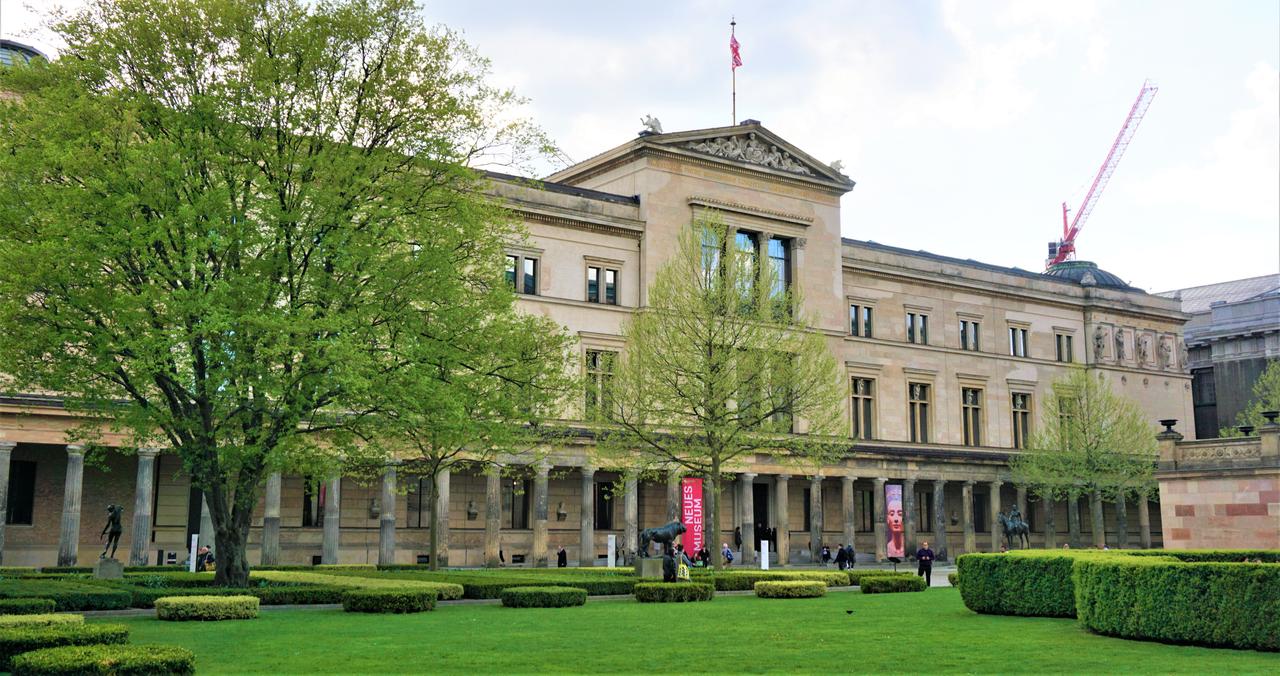
New Museum
Welcome to the Neues Museum, where every cracked wall and exposed brick carries the weight of history alongside the treasures inside. Opened in 1859, this museum was designed by Friedrich August Stüler during Berlin’s rise as a cultural center. It was one of the first museums to bring together such a wide range of collections—from ancient Egyptian artifacts and early human fossils to classical antiquities—all housed under one roof to tell a story of human history spanning continents and centuries. The building itself has seen as much history as the artifacts it protects.
During World War II, it suffered severe damage from repeated bombings and was left in ruins. For over forty years, the museum stood abandoned, fenced off and largely forgotten amid the city’s changing landscape. In the 1990s, British architect David Chipperfield began the careful task of restoration. Instead of covering the war’s destruction, he chose to highlight it, leaving cracks, exposed bricks, and missing plaster visible. This approach turned the museum’s walls into witnesses of the past, blending damage and repair in a way that tells a story of loss and recovery.
When the museum reopened in 2009, it became more than a place to view exhibits—it became a symbol of resilience. Visitors move through spaces where the building’s imperfections serve as silent reminders of conflict and the importance of memory. During restoration, some of the old plaster was removed, revealing original 19th-century wall paintings hidden underneath. This discovery offered a rare glimpse into the museum’s own history and design, connecting the present with its 19th-century origins.
Any feedback for this story?