New National Gallery
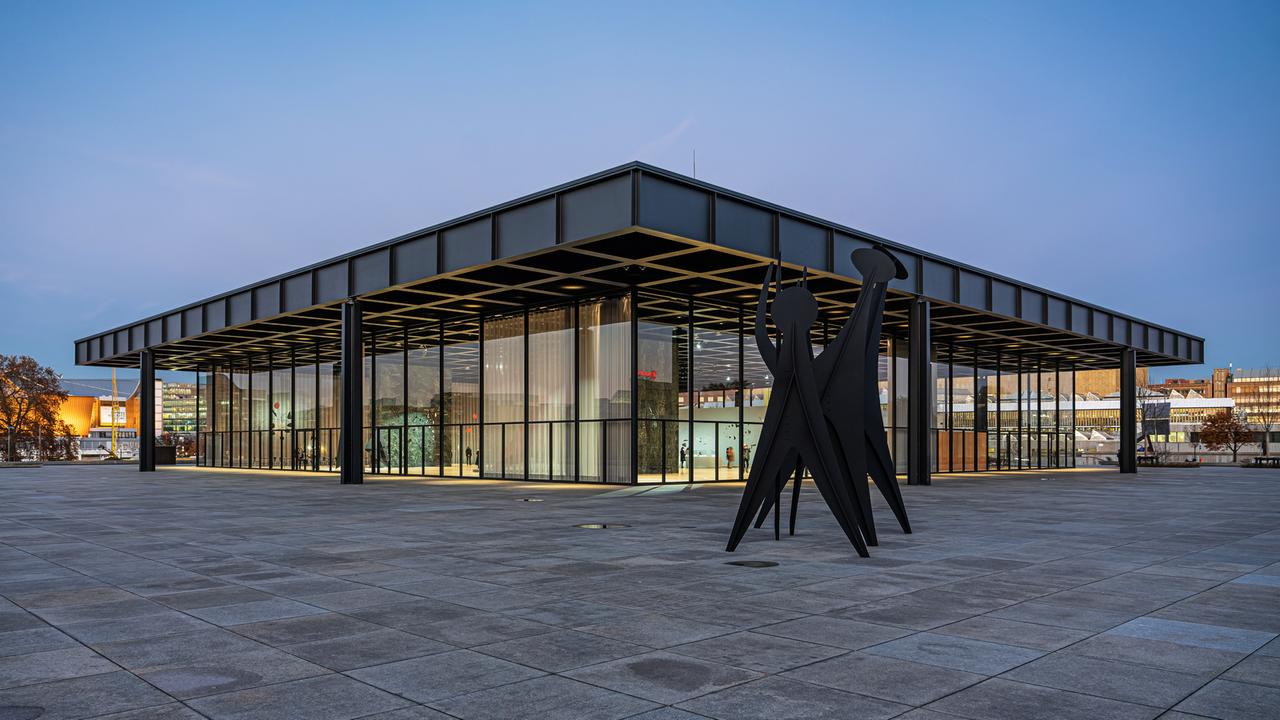
You are now at the heart of Berlin’s Kulturforum, standing before a building that reshaped the way museums interact with their surroundings. The New National Gallery, designed by Ludwig Mies van der Rohe and opened in 1968, is not just a place to view art but an architectural statement about openness and simplicity. Its transparent glass walls and minimalist steel frame invite the city inside, making visitors feel connected to both the art and the urban landscape outside.
This was a deliberate choice by Mies van der Rohe, who believed that architecture should create harmony between inside and outside spaces — an idea that was quite revolutionary for museum design at the time. While many know about its iconic roof, which appears to float supported by just eight slender columns, fewer realize that this massive steel canopy weighs nearly 800 tons. The precision engineering behind this structure was so advanced that it set new standards in architectural design when it was built.
Originally, the gallery was intended to house a collection of 20th-century art, including masterpieces by artists such as Pablo Picasso and Paul Klee. Its placement in the Kulturforum was part of West Berlin’s post-war cultural revival, aimed at creating a new artistic center away from the historic district. Between 2015 and 2021, the New National Gallery underwent extensive restoration, carefully preserving Mies van der Rohe’s vision while updating the building’s infrastructure. Today, as you stand here, you experience a unique blend of art, architecture, and history that continues to define Berlin’s cultural identity.
Any feedback for this story?