New Synagogue
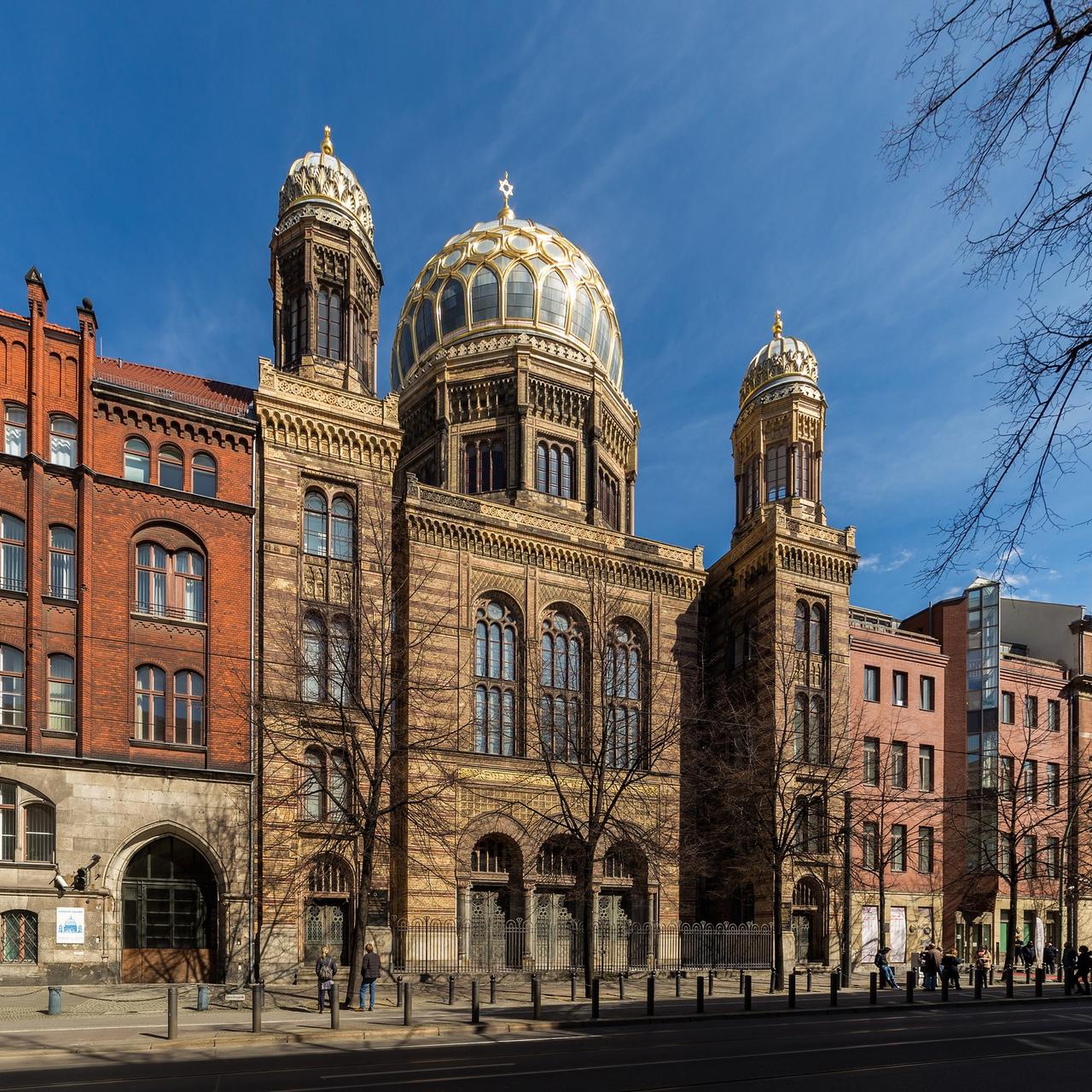
Take a look at the grand façade of the New Synagogue, a striking landmark in the heart of Berlin’s Mitte district. Built between 1859 and 1866, this synagogue was once the largest in Germany and a symbol of the flourishing Jewish community in the city. Designed by architect Eduard Knoblauch and completed by Friedrich August Stüler, its Moorish Revival style is unique, featuring a large golden dome and intricate ornamentation inspired by Middle Eastern architecture. The building not only served religious purposes but also reflected the community’s desire to express cultural pride and integration into German society.
During Kristallnacht in November 1938, the New Synagogue was set on fire by the Nazis. However, unlike many other synagogues, its main structure was saved from total destruction due to the efforts of a local police officer who intervened, preventing it from burning down completely. Despite this, the building was heavily damaged during World War II bombings and fell into disuse during the post-war years. For decades, it stood as a poignant reminder of the community that once thrived there and the tragic history of Jewish persecution in Germany. In the 1980s and 1990s, restoration efforts began to preserve the synagogue’s ruins and rebuild parts of the structure.
Today, the restored New Synagogue serves as a cultural center, museum, and place of worship. It houses the Centrum Judaicum, a museum dedicated to Jewish life and history in Berlin. Visitors can explore exhibitions on Jewish culture, the Holocaust, and the synagogue’s own history, gaining insight into the resilience of Berlin’s Jewish community. The building stands as a symbol of remembrance and hope, linking the city’s past with its present and future.
Any feedback for this story?