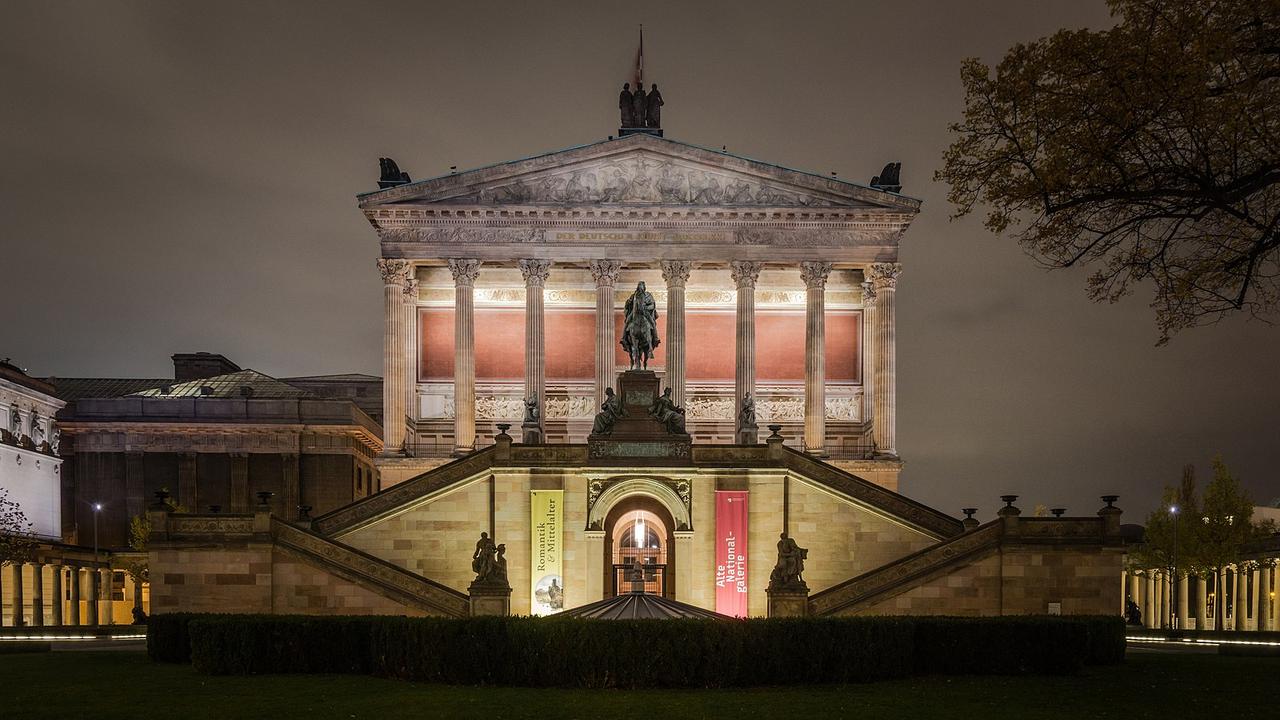
Old National Gallery
Nestled on Berlin’s Museum Island, the Alte Nationalgalerie stands as a monument to the city’s rich artistic heritage. This grand building, designed by Friedrich August Stüler, a pupil of Karl Friedrich Schinkel, was constructed between 1866 and 1876 under the supervision of Johann Heinrich Strack. Stüler’s influence can also be seen in other notable works, such as Berlin’s Neues Museum, the Schwerin Castle, and the Hungarian Academy of Sciences in Budapest.
The Alte Nationalgalerie was originally intended to house the modern art collection of the Akademie der Künste. However, after the devastation of World War II, its collection was divided: part was relocated to the Neue Nationalgalerie, and the building took on its current name to reflect its historical focus. Following German reunification, the collections were reunited, enriching the museum’s holdings. Today, the Alte Nationalgalerie boasts an extensive collection of 19th-century art, featuring highlights from the Romantic and Impressionist movements. Visitors can admire works that reflect the evolving artistic trends of the 19th century.
Since 1987, the Friedrichswerdersche Kirche, also designed by Stüler, has served as a branch of the gallery, showcasing works by classicist sculptors of the Berlin School, including masterpieces by Johann Gottfried Schadow. His art is renowned for its classical elegance and meticulous craftsmanship. The Alte Nationalgalerie not only offers a wealth of art but also tells a story of resilience and cultural revival. The reunification of its collections after the war mirrors Berlin’s broader narrative of recovery and unity.
Any feedback for this story?