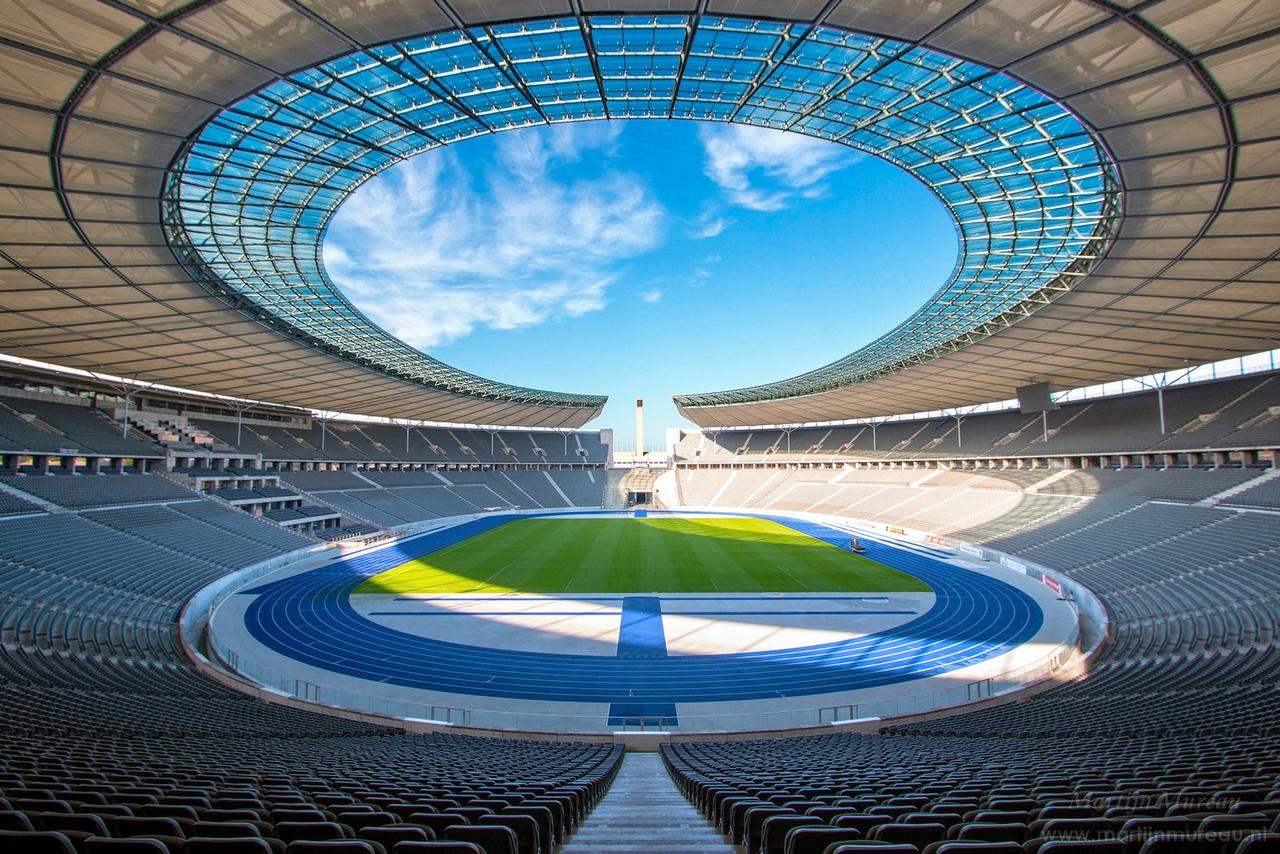
Olympic Stadium
Look closely and you will see the Olympic Stadium standing as a silent witness to Berlin’s complex history and vibrant sporting culture. Built for the 1936 Summer Olympics, the stadium was designed by architect Werner March and is located in the Charlottenburg-Wilmersdorf district. Construction began in 1934 and was completed two years later, reflecting Germany’s ambition to host a grand international event. The stadium was part of a larger sports complex called the Reichssportfeld, which included facilities for various athletic competitions.
Originally, it could hold around 100,000 spectators, making it one of the largest stadiums of its era. Though the 1936 Olympics are often remembered for their political context, the stadium itself introduced important innovations. It was among the first to feature a synthetic track surface and hosted the first-ever Olympic torch relay, a tradition that continues today. After World War II, the stadium sustained damage but was restored in the 1950s and again in the 1970s to meet modern safety and sporting standards.
Today, it is home to Hertha BSC, Berlin’s major football club, and hosts concerts, international matches, and other events. A lesser-known detail is the network of tunnels and bunkers beneath the stadium, built during the Nazi era for strategic military use. Some of these underground passages are open to visitors during guided tours, revealing a hidden layer of the stadium’s history.
Any feedback for this story?