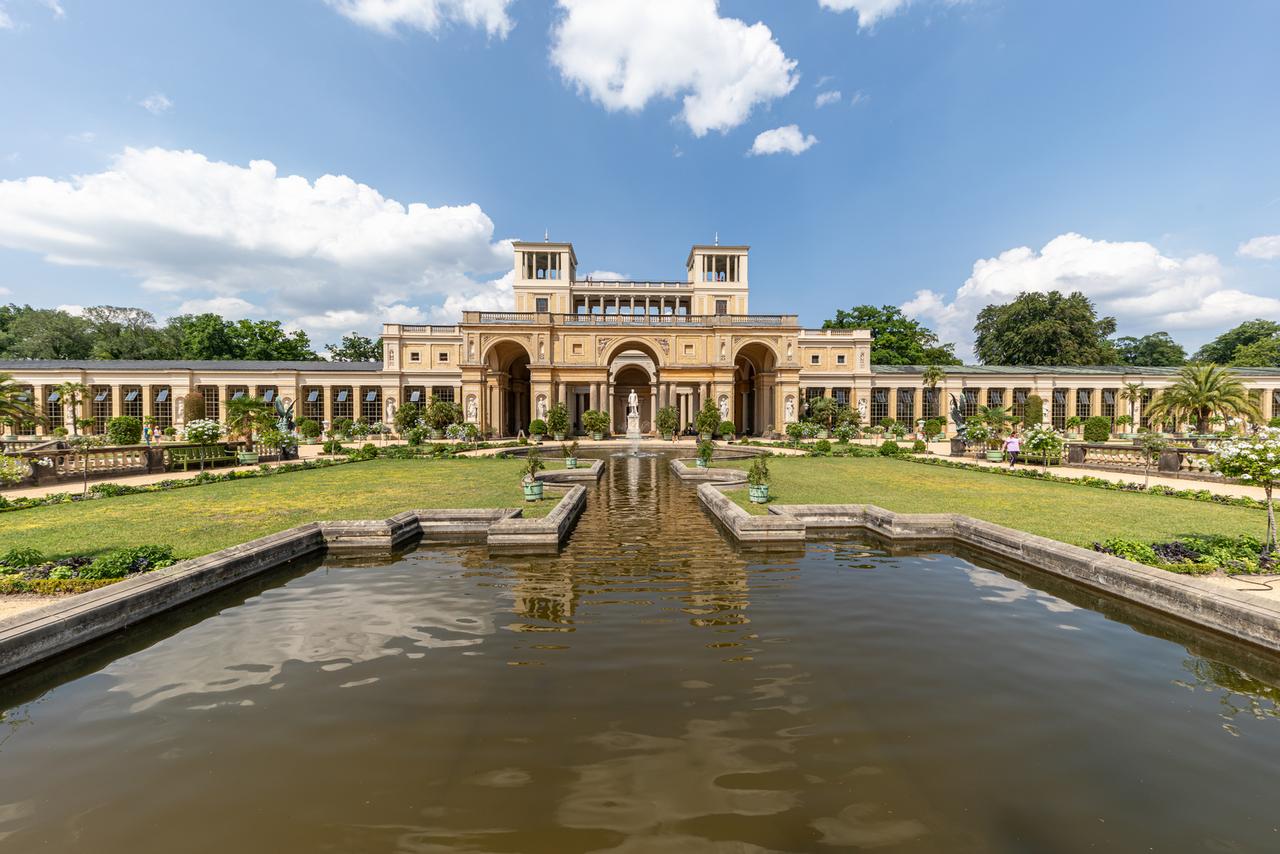
Orangery Palace in Potsdam
Right in front of you is the Orangerie Palace in Potsdam, a building that once brought a touch of the Mediterranean climate to northern Germany through its collection of delicate citrus and palm trees. Constructed between 1851 and 1864 by order of King Friedrich Wilhelm IV, this palace blends Italian Renaissance architectural style with practical design to protect exotic plants during cold winters.
The Orangerie served as a winter shelter for orange, lemon, and palm trees transported from southern Europe, showcasing the royal family's interest in botany and their desire to bring foreign beauty into their gardens. Its design allowed these plants to survive the harsh German winters, making it more than just a decorative garden building. A lesser-known feature of the Orangerie is its advanced heating system for the time. It used hot air ducts beneath the floors to maintain a warm climate inside, an early form of climate control that was essential for keeping the sensitive plants alive.
This technology reflects the innovative spirit of the 19th century in royal horticulture. In addition to its botanical purpose, the Orangerie was a cultural venue. Its spacious halls and terraces were used for royal events, concerts, and art exhibitions, combining nature with courtly entertainment. The palace’s location connects it visually and physically to the famous Sanssouci Park, making it a key element in Potsdam’s royal landscape. Today, the Orangerie Palace is part of the UNESCO World Heritage Site that includes Potsdam’s palaces and parks. Visitors admire it not only for its beauty but also as a symbol of 19th-century advances in architecture, technology, and horticulture.
Any feedback for this story?