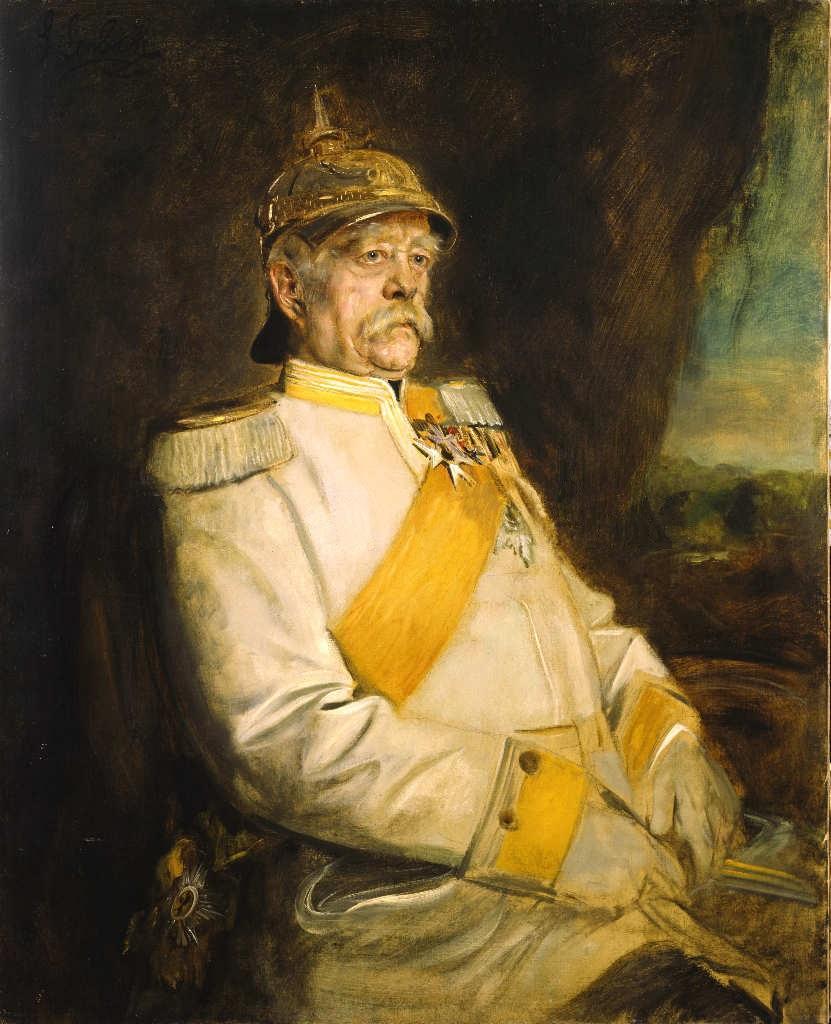
Otto von Bismarck
In European history, Otto von Bismarck, the Iron Chancellor, stands as one of the most pivotal figures. With sharp political acumen and strategic foresight, he unified the German states and built the German Empire into a European power. Born on April 1, 1815, in Schönhausen, Prussia, Bismarck initially focused on law and agriculture rather than politics. In 1847, he was elected to the Prussian United Diet, where he soon emerged as a staunch conservative and defender of monarchy and tradition.
His rise began in 1862 when King Wilhelm I appointed him Minister-President of Prussia. Amid a constitutional crisis over military reforms, Bismarck sidelined parliament and carried out reforms under the king’s authority. His pragmatic and often ruthless style of governance became clear. His greatest achievement was German unification, achieved through three wars. In 1864, Prussia and Austria defeated Denmark and annexed Schleswig and Holstein. In 1866, Prussia decisively defeated Austria, leading to the North German Confederation.
The decisive moment came with the Franco-Prussian War of 1870-1871. After a swift victory, the German Empire was proclaimed on January 18, 1871, in Versailles, with Wilhelm I as Emperor and Bismarck as Chancellor. As Chancellor, he consolidated the new state with the Kulturkampf against the Catholic Church and introduced social reforms such as health insurance, accident insurance, and pensions, laying foundations for the welfare state. In foreign policy, he maintained European balance through alliances, keeping Germany at peace. In 1890, Kaiser Wilhelm II dismissed him, ending an era. Bismarck died on July 30, 1898, in Friedrichsruh, leaving a legacy that shaped Germany and Europe.
Any feedback for this story?